Listen
Arrangement: Ian J. Watts / Mike Wilbury · Singalongasong Band / ClassicRocks
Lyrics
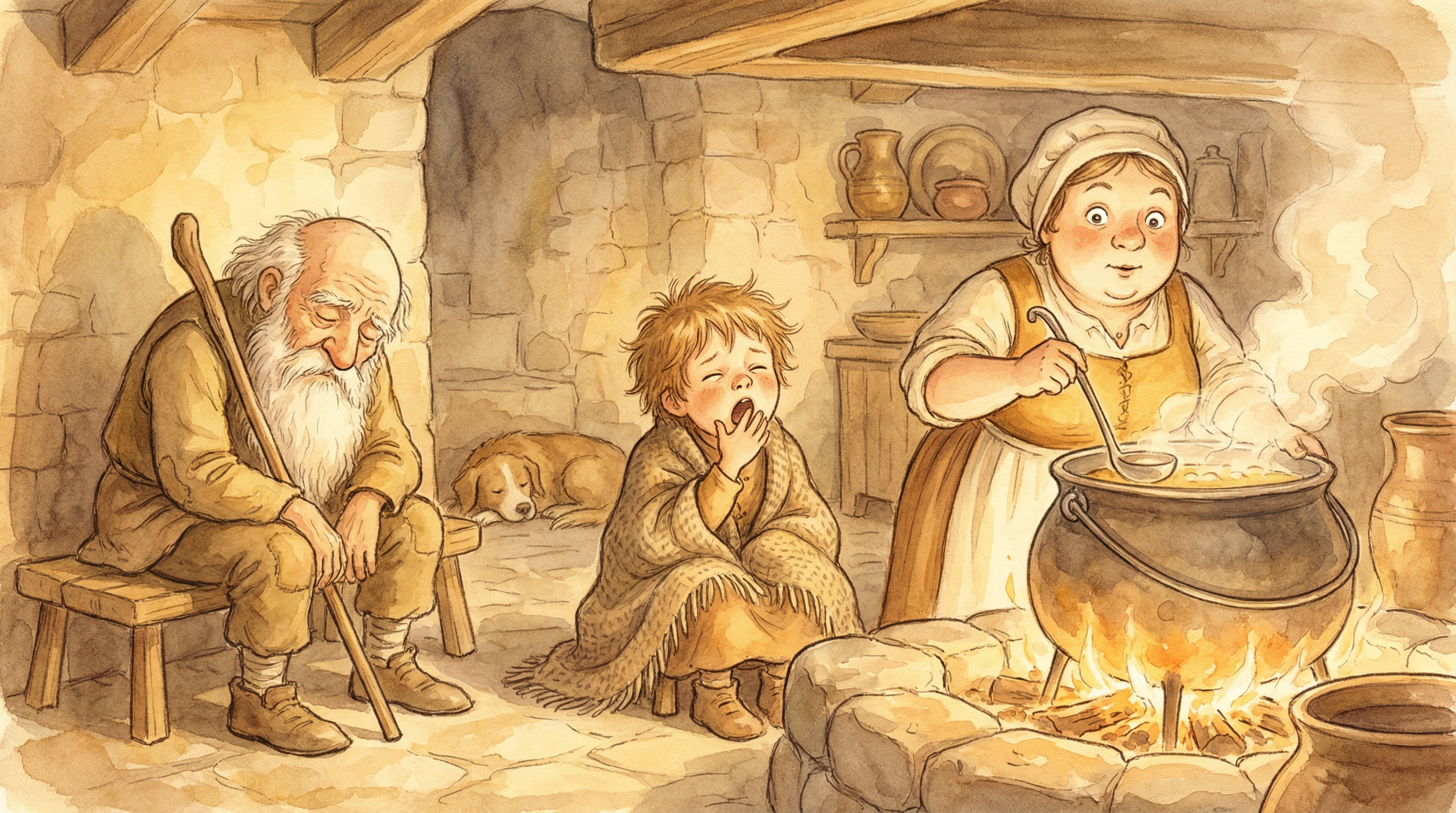
Come let's to bed, says sleepy head;
Tarry a while, says Sow;
Put on the pan, says Greedy Nan,
Let's sup before we go.
Traditional lyrics — public domain. Arrangement © Singalongasong Band / ClassicRocks.
History & Background
History & Origin
"Come Let's to Bed" is a brief, three-voiced nursery rhyme in which three named characters negotiate the end of the day — and the question of whether supper should come before sleep. It is one of the most compact pieces in the English nursery rhyme canon: just four lines, three characters, and a complete dramatic situation.
The rhyme first appeared in print in "Gammer Gurton's Garland," a collection of traditional English nursery rhymes first published around 1784. The three characters — Sleepy Head, Sow (here meaning a sluggard or "slow coach"), and Greedy Nan — are essentially comic personifications of different human impulses at the end of the day: the desire to sleep, the desire to linger, and the desire for one more thing to eat.
"Greedy Nan" is a particularly vivid creation: she wins the argument by suggesting supper. The rhyme ends before we learn whether anyone actually goes to bed, which gives it a slightly comic open ending — the adult question of whether to stay up or go to sleep remains unresolved, as it does in most households with young children.
The word "sup" — to have a light evening meal — was common in English through the nineteenth century and survives in some regional dialects today. The rhyme thus captures a specific moment in the domestic rhythm of traditional life: the end of the working day, the dying of the fire, and the debate about whether to have a bite before bed.
Its brevity makes it ideal as a bedtime cue: short enough to say as you tuck a child in, vivid enough to prompt a smile.