Dance Ter Yer Daddy
A joyful Scottish fisher-folk song celebrating the return of the fishing boats
Listen
Arrangement: Ian J. Watts / Mike Wilbury · Singalongasong Band / ClassicRocks
Lyrics
Dance tae yer daddy, ma bonnie laddy,
Dance tae yer daddy, ma bonnie lamb.
You shall have a fish and you shall have a fin,
You shall have a codlin when the boat comes in.
You shall have a haddock baked in a pan,
Dance to your daddy, ma bonnie lamb.
Traditional lyrics — public domain. Arrangement © Singalongasong Band / ClassicRocks.
History & Background
History & Origin
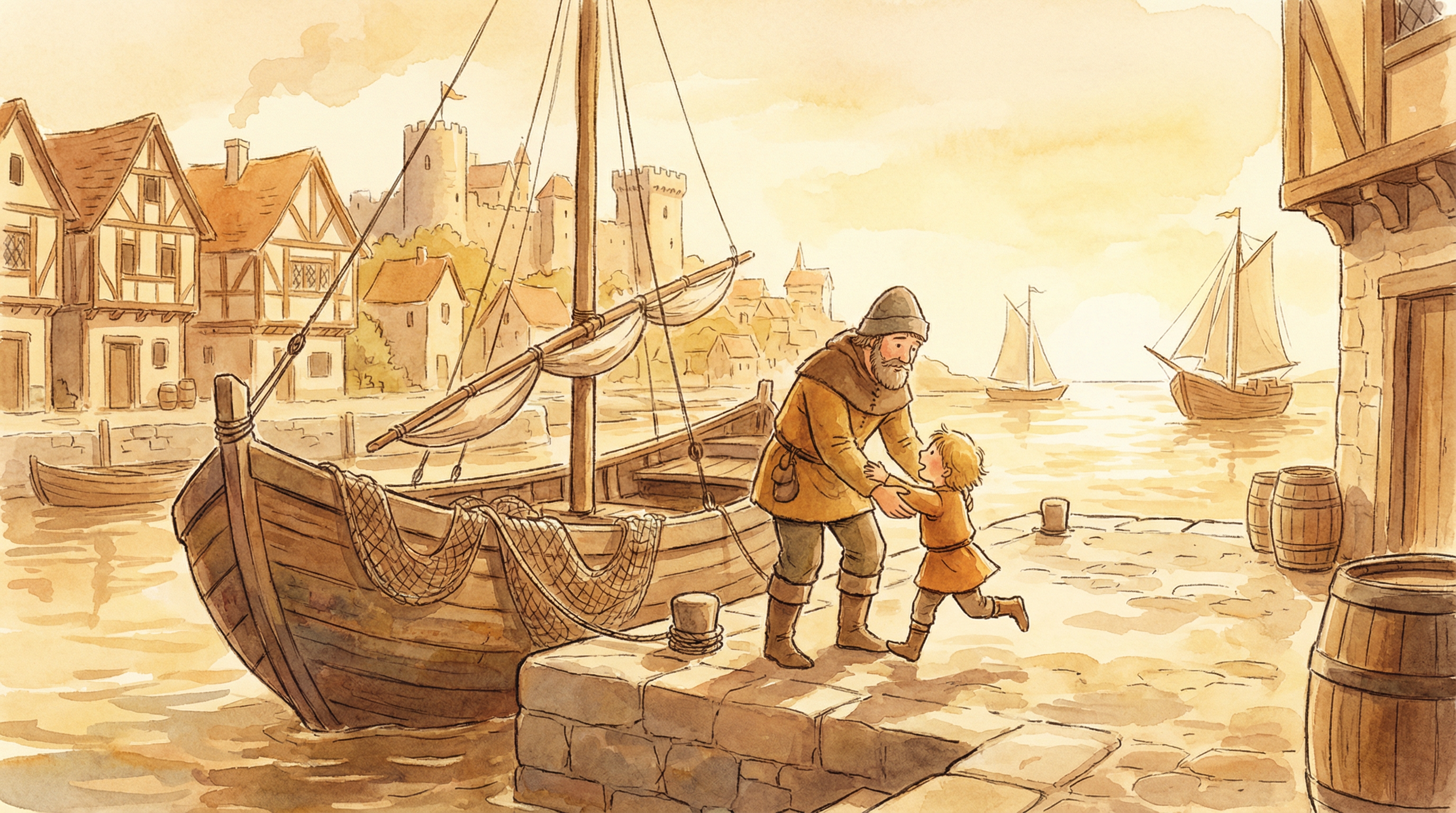
"Dance to Your Daddy" is a traditional North East English song — sometimes described as Northumbrian or Geordie — that celebrates the return of a fishing boat and the bounty it brings home. The song is a knee-bouncing rhyme, designed for fathers to use with young children in the rhythmic, physical way of the oldest nursery traditions.
The specific fish mentioned — codlin (a type of cod), haddock — place the song firmly in the fishing communities of the North East coast, where the catch was the economic heartbeat of village life. The promise of "a fish and a fin" is the promise of a good meal, which in a fishing community meant the boats had come in safely.
The title phrase, "dance to your daddy," appears in various forms across Northern English and Scottish dialects. The Scots form — "Dance tae yer Daddy, ma bonnie laddy" — suggests the song has equivalents on both sides of the border, and indeed there are Scottish versions that use almost identical imagery.
The song was collected by folklorists in the late nineteenth and early twentieth centuries as part of the broader effort to preserve regional folk traditions before industrialisation erased them. Cecil Sharp, the great English folk song collector, recorded versions of the piece during his fieldwork in the North East.
There is something particularly affecting about the image in this song: a fisherman arriving home after days at sea, bouncing his child on his knee and promising fish for supper. It is a snapshot of a way of life that has largely passed.