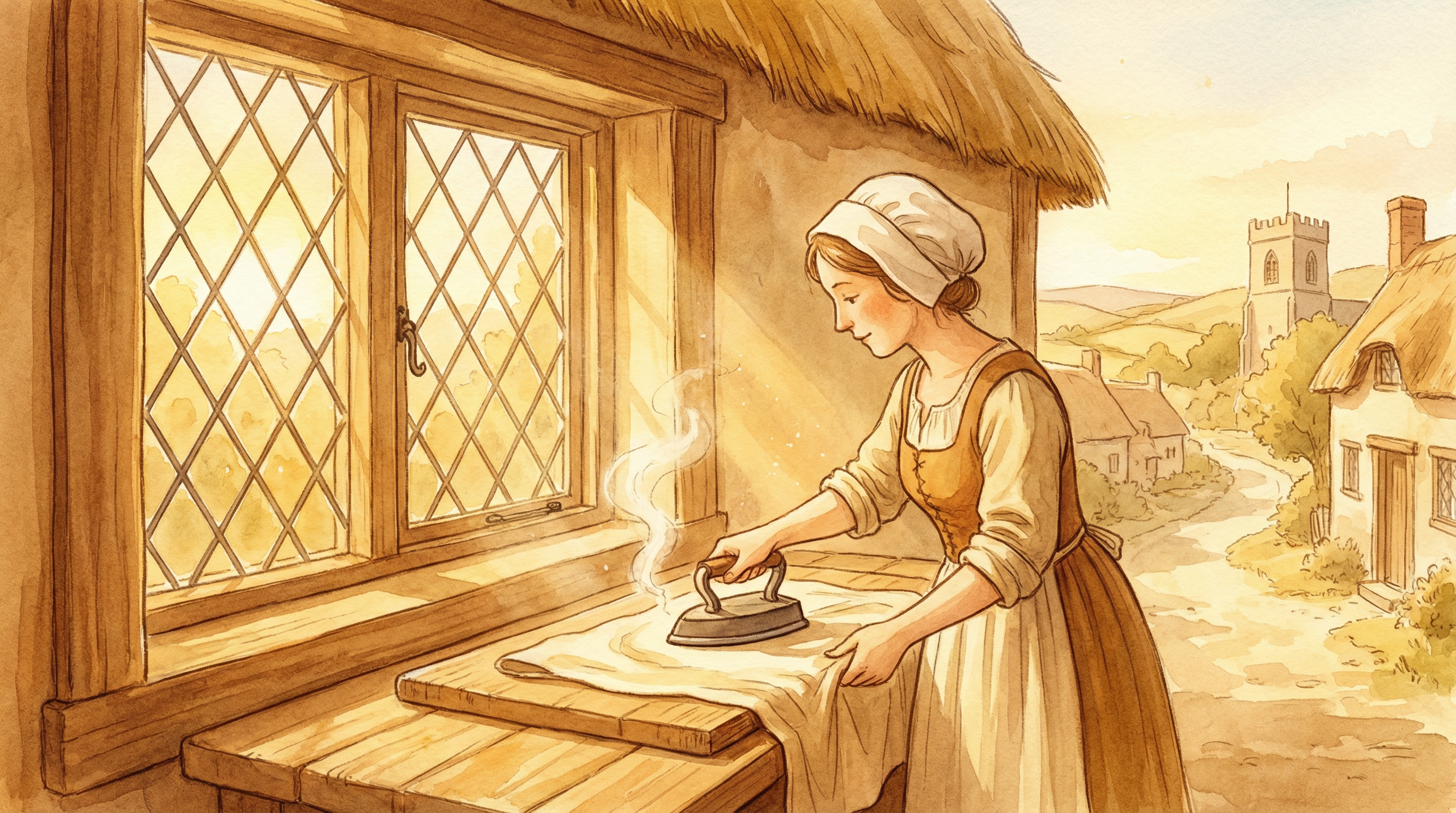
Dashing Away With the Smoothing Iron
A cheerful folksong following a young man's admiration through every day of the week
Listen
Arrangement: Ian J. Watts / Mike Wilbury · Singalongasong Band / ClassicRocks
Lyrics
It was on a Monday morning
When I beheld my darling,
She looked so neat and charming
In every high degree.
She looked so neat and nimble, oh,
A-washing of her linen, oh,
Dashing away with the smoothing iron,
She stole my heart away.
It was on a Tuesday morning
When I beheld my darling,
She looked so neat and charming
In every high degree.
She looked so neat and nimble, oh,
A-ironing of her linen, oh,
Dashing away with the smoothing iron,
She stole my heart away.
Traditional lyrics — public domain. Arrangement © Singalongasong Band / ClassicRocks.
History & Background
History & Origin
"Dashing Away with the Smoothing Iron" is a traditional English folk song that has been collected in various forms across the British Isles, particularly in Yorkshire and the North of England. Its structure is pleasingly systematic: each verse takes a day of the week and describes the young woman in a different stage of her laundry — washing, bleaching, starching, ironing, folding, airing, and finally, on Sunday, wearing the finished linen.
The "smoothing iron" of the title is a flat iron — a heavy, solid iron tool heated at the fire and used to press and smooth cloth. Before electric irons, this was a labour-intensive task that required skill and strength; the irons were heavy, and maintaining the right temperature required constant monitoring. The image of a young woman dashing through this work with such energy and competence that she captures a young man's heart is characteristic of the admiring, practical romanticism of English folk song.
The song has been collected and recorded by numerous folk artists, including Ewan MacColl, who made it famous in the 1950s folk revival. A version was included in the Copper Family's repertoire — a Sussex folk singing dynasty whose recordings are among the most important documents of the English traditional music tradition.
The weekly structure gives the song a satisfying completeness. By Sunday, the laundry is worn — the entire domestic cycle complete — and the young man's admiration has not waned. It is a love song in which the beloved's competence is the source of attraction, which gives it a grounded, real-world charm.