Eeny Meeny Miny Moe
The ancient counting-out rhyme used by children the world over to decide who goes first
Listen
Arrangement: Ian J. Watts / Mike Wilbury · Singalongasong Band / ClassicRocks
Lyrics
Let's decide who it shall be,
Shall it be you, or shall it be me?
Eeny, Meeny, Miny, Moe,
Catch a tiger by its toe,
If it squeals, let it go,
Eeny, Meeny, Miny, Moe,
O-U-T spells ‘out'.
Let's decide who it shall be,
Shall it be you, or shall it be me?
Me then you or you then me?
Let's do the rhyme and we shall see!
Eeny, Meeny, Miny, Moe,
Catch a tiger by its toe,
If it squeals, let it go, (two, three, four)
Eeny, Meeny, Miny, Moe,
O-U-T spells ‘out'.
Additional lyrics by Ian Watts
Traditional lyrics — public domain. Arrangement © Singalongasong Band / ClassicRocks.
History & Background
History & Origin
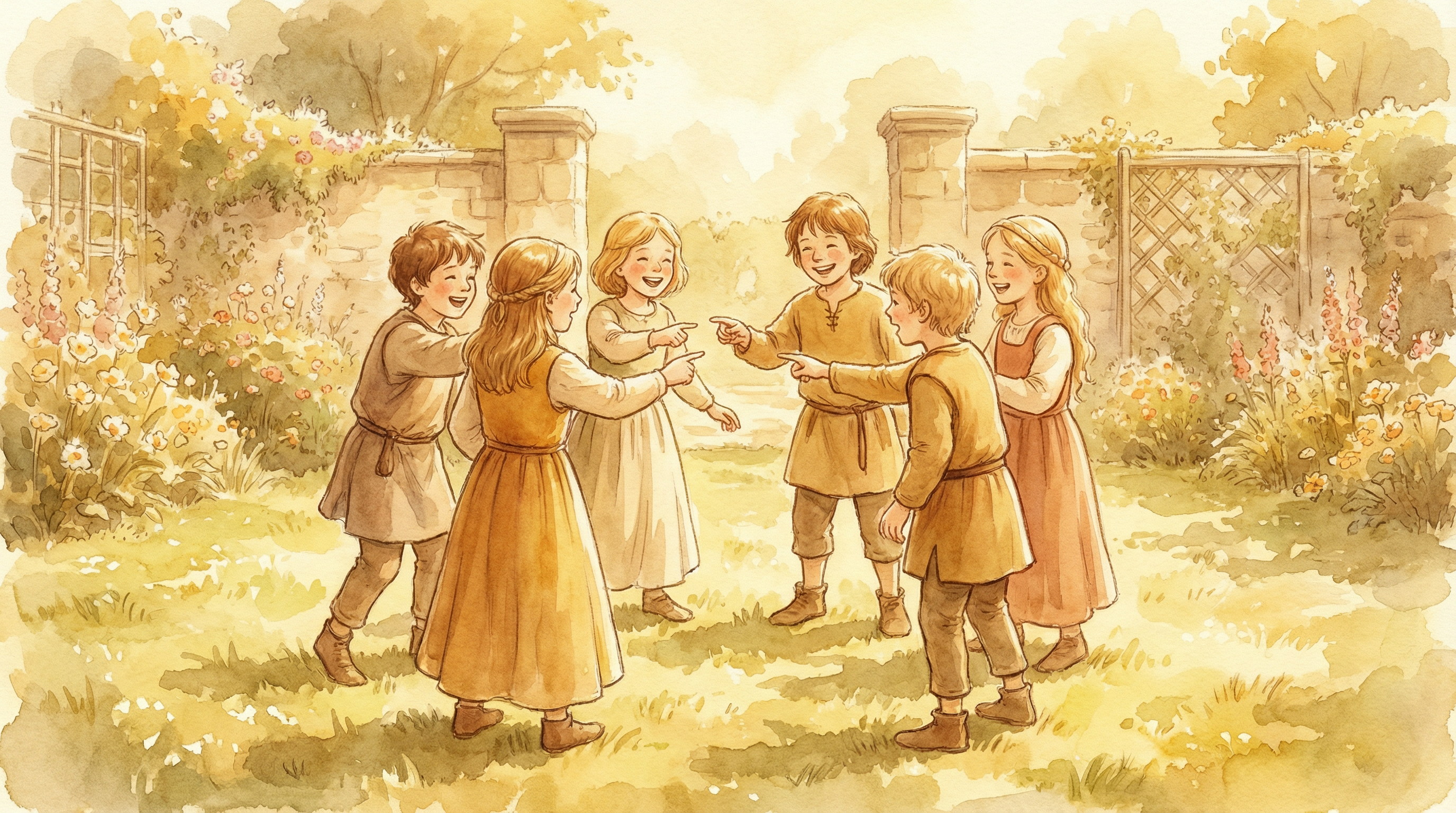
"Eeny, Meeny, Miny, Moe" is one of the most widely known counting-out rhymes in the English language, used by children to make random selections — deciding who is "it" in a game, or who goes first. Its origins are genuinely ancient, though the precise history is difficult to untangle from folk tradition.
Counting-out rhymes are a form of children's folk culture found in virtually every language and culture, serving the same practical and social function everywhere: they provide a neutral, apparently random method for making group decisions that avoids direct conflict. By externalising the choice to a rhyme, children sidestep the social difficulty of one child simply choosing another.
The phrase "eeny, meeny, miny, moe" has been traced to a range of possible origins. One theory connects it to ancient counting systems — some linguists have noted similarities to Welsh and Cornish words for numbers, suggesting the rhyme may preserve traces of a pre-English counting system used by shepherds. Others link it to Roman or Norse numerals. None of these theories has been conclusively proved, but the antiquity of the basic structure seems certain.
The "catch a tiger by its toe" version replaced earlier, more offensive versions of the rhyme that used a racial epithet. The tiger version became standard in the mid-twentieth century as attitudes shifted, and is now the only version in common use.
The version in our recording adds a sung introduction and gives the whole thing an upbeat, participatory energy that turns the counting-out process itself into a musical event.