Listen
Arrangement: Ian J. Watts / Mike Wilbury · Singalongasong Band / ClassicRocks
Lyrics
Go to sleep my babies
Close your pretty eyes
Angels up above you
Look down on you from the sky.
Great big moon is shining
Stars begin to glow
It's time for all the tiny babies
To go to sleep
Go to sleep my babies
Close those pretty eyes
Angels are above you
Keeping watch over you.
Big blue moon is shining
Stars begin to peep
time for little tiny babies
To go to sleep
(laughter)
Go to sleep
Go to sleep
GO TO SLEEP MY BABIEEEES!
Go to sleep my babies
Close those pretty eyes
Angels are above you
Keeping watch over you.
Big blue moon is shining
Stars begin to peep
(peep peep peep, peep peep peepeep)
time for all those tiny babies
To go to sleep
GO TO SLEEP MY BABIEEEES!
Traditional lyrics — public domain. Arrangement © Singalongasong Band / ClassicRocks.
History & Background
History & Origin
"Go to Sleep You Baby" is a gentle lullaby that uses direct address — speaking straight to the baby — as its primary technique. This approach is common in lullaby traditions around the world: rather than singing about sleep in the abstract, the parent or carer speaks directly to the child, creating an intimate, one-to-one connection that is itself soothing.
The imagery in the song is drawn from the night sky and from a sense of divine or angelic protection: the moon shining, stars beginning to glow, angels looking down from above. This celestial imagery is found in lullabies across many cultures — perhaps because the night sky, with its steady, changeless stars, offers a sense of permanence and peace that is genuinely reassuring.
The tradition of invoking angels or protective spirits to watch over sleeping children has roots in both folk religion and formal Christianity. The "guardian angel" prayer — "Angel of God, my guardian dear, to whom His love entrusts me here" — was a standard part of children's bedtime routine in Catholic households for centuries, and similar invocations of spiritual protection are found in Protestant, Orthodox, and folk traditions alike.
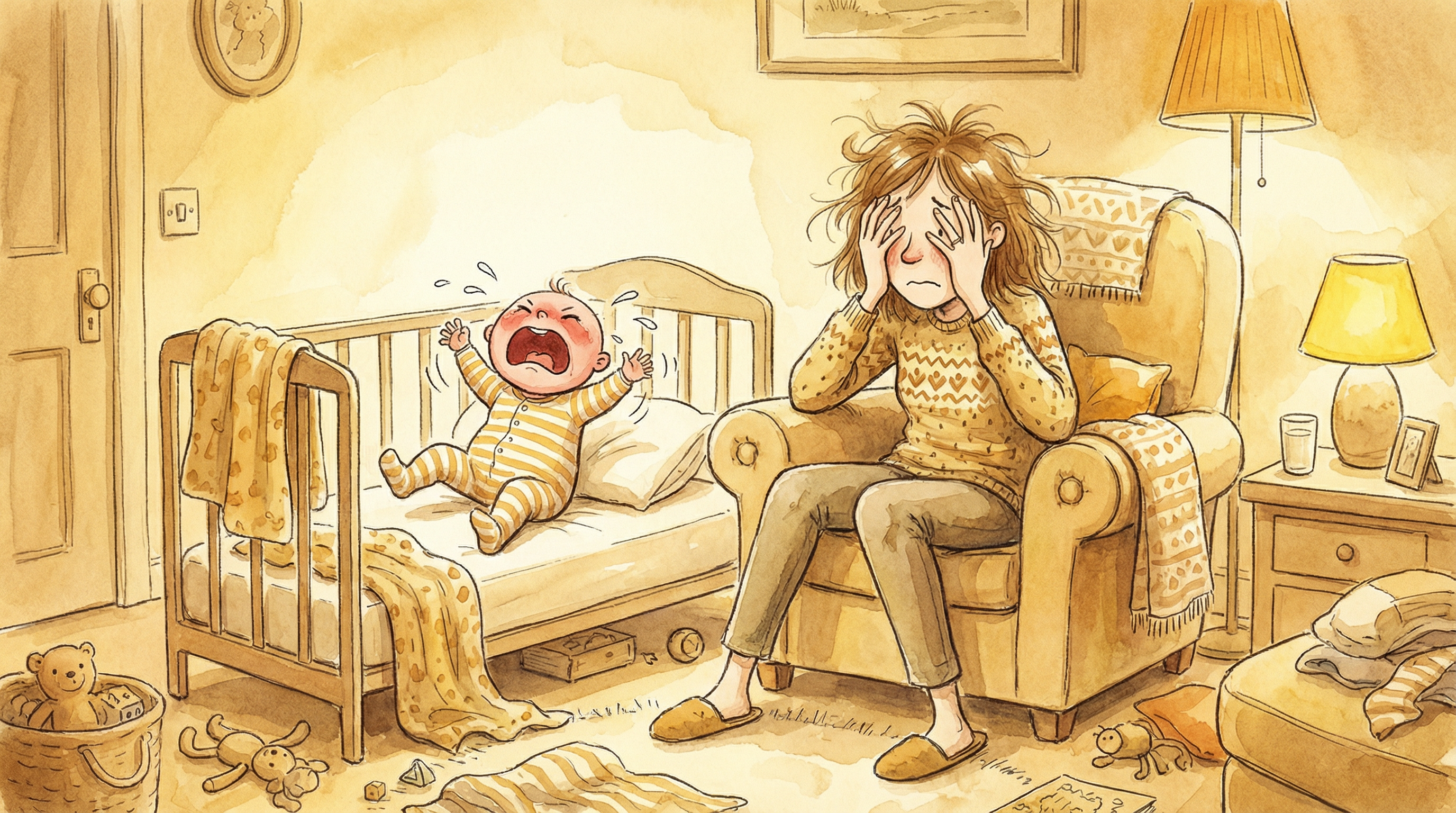
The title's direct address — "Go to sleep, you baby" — has a warmth and slight urgency that many parents will recognise. It is not quite a command and not quite a plea; it is the voice of someone who loves the baby dearly and also, if they are honest, would very much like them to close their eyes.
Our recording has a warmth and simplicity that makes it ideal for the end of a busy day.