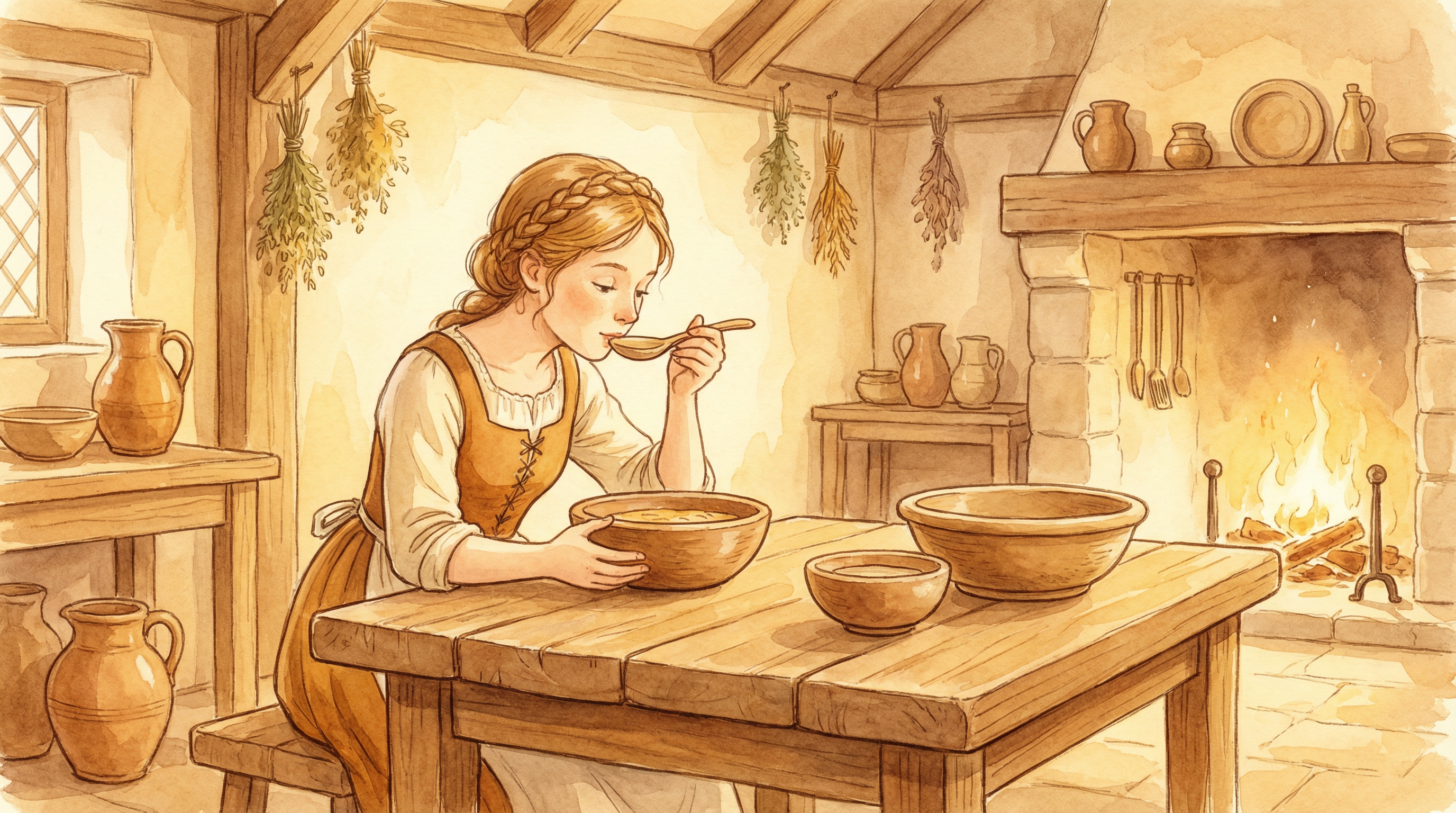
Goldilocks and the Three Bears
The beloved counting and story song about porridge, chairs, and a very nosy little girl
Listen
Arrangement: Ian J. Watts / Mike Wilbury · Singalongasong Band / ClassicRocks
Lyrics
When Goldilocks went to the house of the bears,
Oh what did her blue eyes see?
A bowl that was huge,
And a bowl that was small,
And a bowl that was tiny and that was all,
And she counted them one, two, three,
She counted them one, two, three.
When Goldilocks went to the house of the bears,
Oh what did her blue eyes see?
A chair that was huge,
And a chair that was small,
And a chair that was tiny and that was all,
And she counted them one, two, three,
She counted them one, two, three.
When Goldilocks went to the house of the bears,
Oh what did her blue eyes see?
A bed that was huge,
And a bed that was small,
And a bed that was tiny and that was all,
She counted them one, two, three,
Yes, and she counted them one, two, three.
When Goldilocks went to the house of the bears,
Oh what did her blue eyes see?
A bear that was huge,
And a bear that was small,
And a bear that was tiny and that was all…
And they growled at her; raghh, raghh, raghh!
Traditional lyrics — public domain. Arrangement © Singalongasong Band / ClassicRocks.
History & Background
History & Origin
"Goldilocks and the Three Bears" is one of the most enduring fairy tales in the English canon, and in this version it is retold as a counting song, with the three bears' belongings presented in sequence: a huge bowl, a small bowl, and a tiny bowl — one, two, three.
The story of the three bears was first published in 1837 by the poet Robert Southey in his collection "The Doctor," though the original intruder in Southey's version was not a golden-haired girl but a "Silver-haired old woman" — a decidedly less sympathetic figure. The transformation of the intruder into a golden-haired child named Goldilocks happened gradually across the nineteenth century, with the name "Goldilocks" first appearing in a version by Joseph Cundall in 1849.
The tale's appeal rests on its mathematical elegance: everything in the bears' house comes in three sizes (too big, too small, just right), and the story is essentially an exercise in comparison and preference. The "just right" principle — not too much, not too little — resonates as a practical philosophy of life as much as a narrative device.
The counting-song adaptation uses this tripartite structure to teach children to count to three while following the familiar story. The combination of known narrative and number learning is highly effective: children are already invested in the story, so the counting comes almost for free.
As a children's song, "Goldilocks" also raises quietly interesting questions about property, trespass, and the difference between the bears' reasonable expectations and Goldilocks's blithe disregard for them — though most children are simply delighted by the bears coming home.