Here We Go Round the Mulberry Bush
A ring-game song about morning routines on a cold and frosty day
Listen
Arrangement: Ian J. Watts / Mike Wilbury · Singalongasong Band / ClassicRocks
Lyrics
Here we go round the mulberry bush,
The mulberry bush, the mulberry bush.
Here we go round the mulberry bush,
On a cold and frosty morning.
This is the way we wash our hands,
Wash our hands, wash our hands.
This is the way we wash our hands,
On a cold and frosty morning.
This is the way we wash our face,
Wash our face, wash our face.
This is the way we wash our face,
On a cold and frosty morning.
This is the way we brush our teeth,
Brush our teeth, brush our teeth.
This is the way we brush our teeth,
On a cold and frosty morning.
This is the way we comb our hair,
Comb our hair, comb our hair.
This is the way we comb our hair,
On a cold and frosty morning.
Here we go round the mulberry bush,
The mulberry bush, the mulberry bush.
Here we go round the mulberry bush,
On a cold and frosty morning.
Traditional lyrics — public domain. Arrangement © Singalongasong Band / ClassicRocks.
History & Background
History & Origin
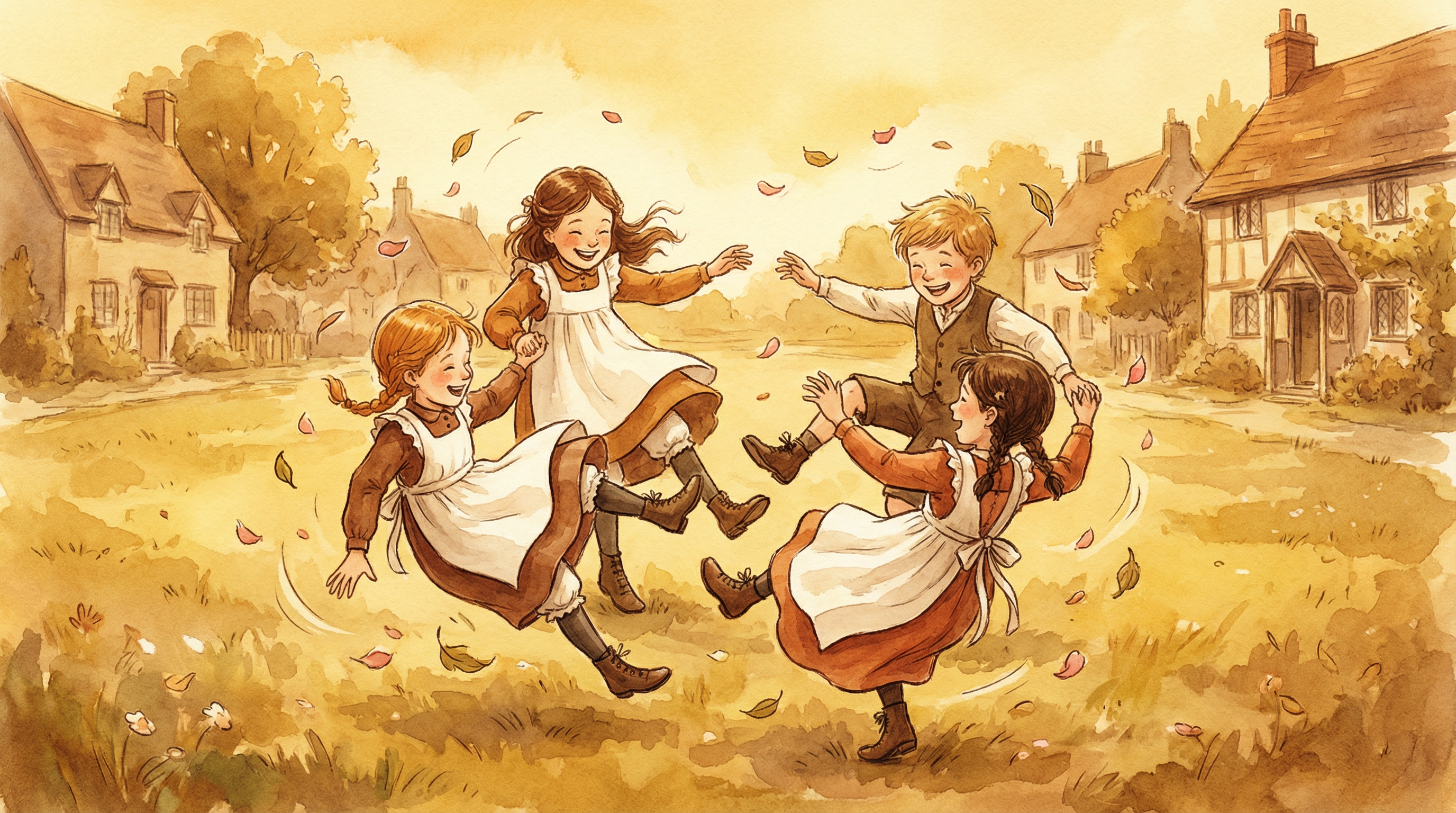
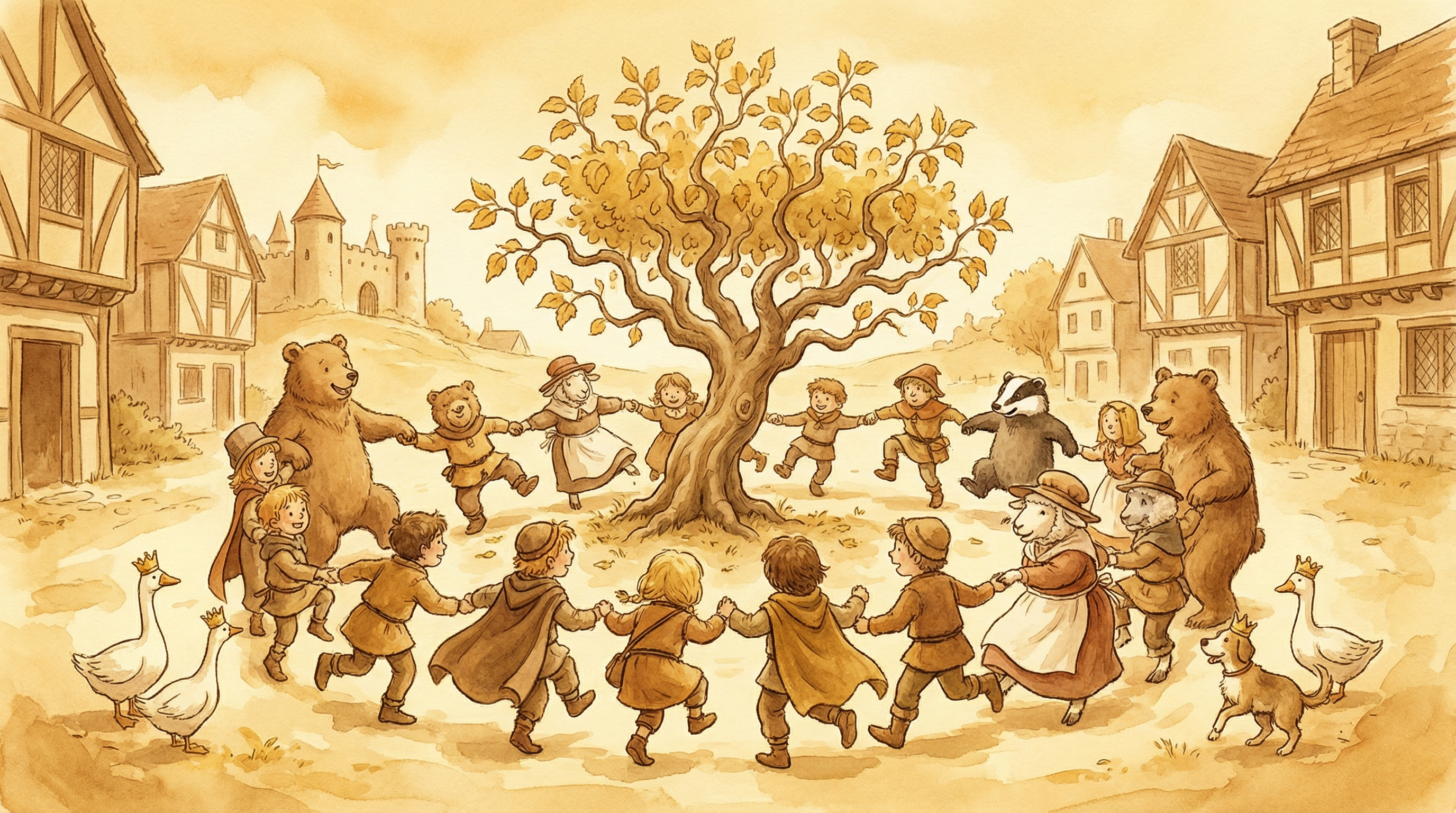
"Here We Go Round the Mulberry Bush" is a ring game and action song, first recorded in print in 1842 by James Orchard Halliwell in The Nursery Rhymes of England. Children hold hands in a circle, dancing around as they sing the opening verse, then mime the actions of each activity verse — washing hands, scrubbing faces, combing hair — before returning to the chorus.
The origin of the mulberry bush itself has been the subject of a persistent but largely unverified legend connecting the song to Wakefield Prison in Yorkshire, where female prisoners reportedly exercised around a mulberry tree. No contemporary evidence supports this claim, and it is almost certainly a later invention.
More likely, the song originated as a simple ring game in which the mulberry bush served as a convenient centrepiece — a real bush children danced around. Mulberry trees were common in English gardens and estates until the nineteenth century, often planted deliberately for silk production from silkworm cultivation.
The "cold and frosty morning" setting gives the song a specific seasonal feel: children bundled up, breath misting in the air, going through the routines of a winter morning. This sensory detail, combined with the cumulative action verses, has kept the song alive in nurseries and classrooms for nearly two centuries.