Listen
Arrangement: Ian J. Watts / Mike Wilbury · Singalongasong Band / ClassicRocks
Lyrics
Hickety, pickety, my black hen,
She lays eggs for gentlemen;
Gentlemen come every day
To see what my black hen doth lay.
Hickety, pickety, my black hen,
She lays eggs for gentlemen;
Sometimes nine, sometimes ten,
Hickety, pickety, my black hen.
Traditional lyrics — public domain. Arrangement © Singalongasong Band / ClassicRocks.
History & Background
History & Origin
"Hickety, Pickety, My Black Hen" is an old English nursery rhyme that first appeared in print around 1853, though oral versions were likely circulating long before. The rhyme has a pleasingly rhythmic quality — the opening phrase "hickety, pickety" is pure sound play with no literal meaning, a kind of barnyard onomatopoeia that captures the pecking, fussing energy of a hen going about her business.
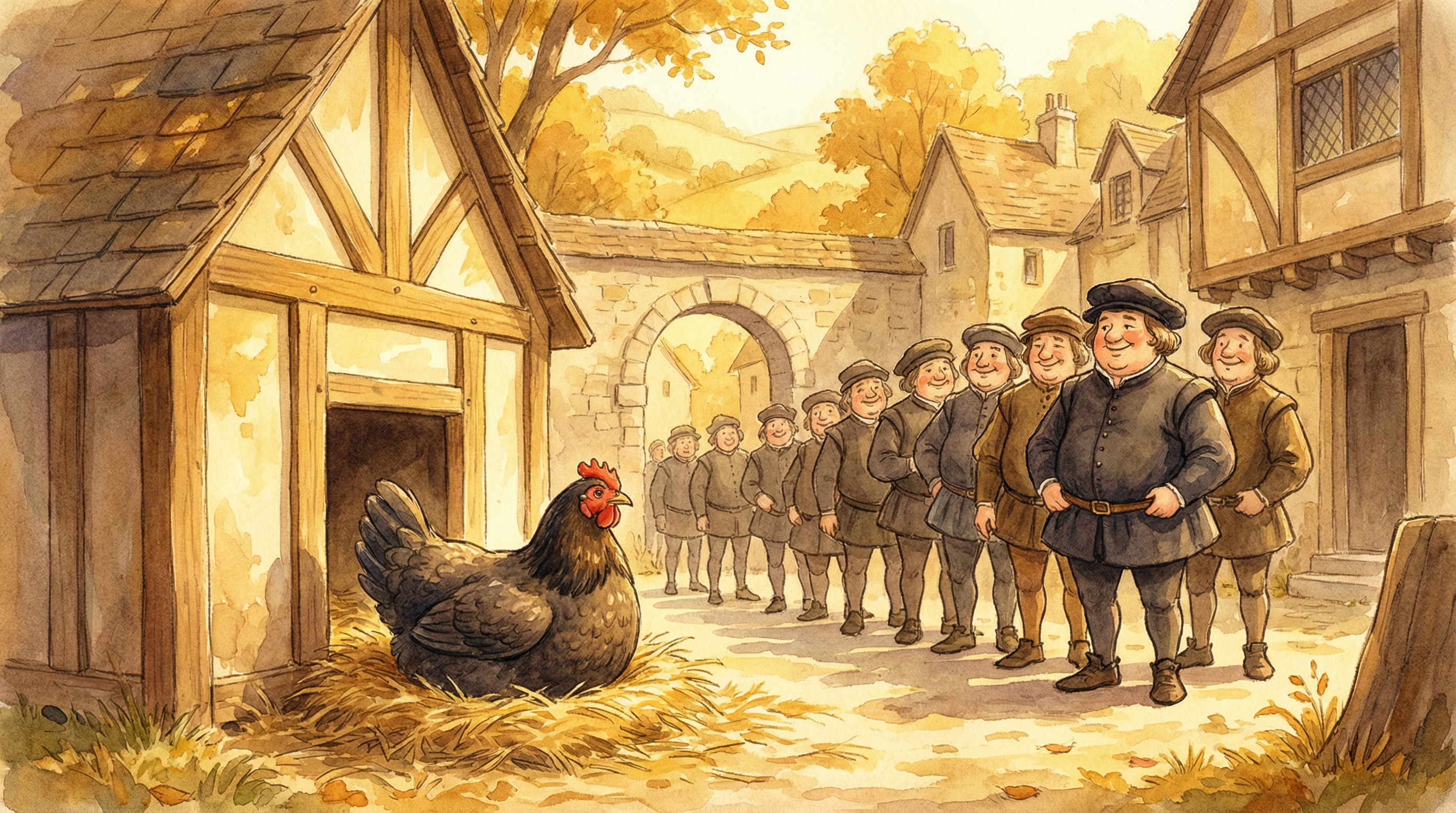
The premise is simple and charming: a black hen, clearly prized for her productivity, lays eggs daily for the gentlemen of the household or village who come specifically to observe and collect her output. In an age before commercial egg production, a reliable laying hen was genuinely valuable, and a black hen — considered lucky in some traditions — particularly so.
The variation in the second verse ("sometimes nine, sometimes ten") gives the rhyme a slightly comic quality, as if the hen's output is mildly unpredictable and the gentlemen must turn up each day to find out. The repetition of "hickety, pickety, my black hen" as a bookend creates a satisfying circular structure that makes the rhyme easy to memorise and fun to recite.
Our arrangement gives this small, cheerful rhyme a punchy fun-punk production that suits the energetic nature of the subject.