Listen
Arrangement: Ian J. Watts / Mike Wilbury · Singalongasong Band / ClassicRocks
Lyrics
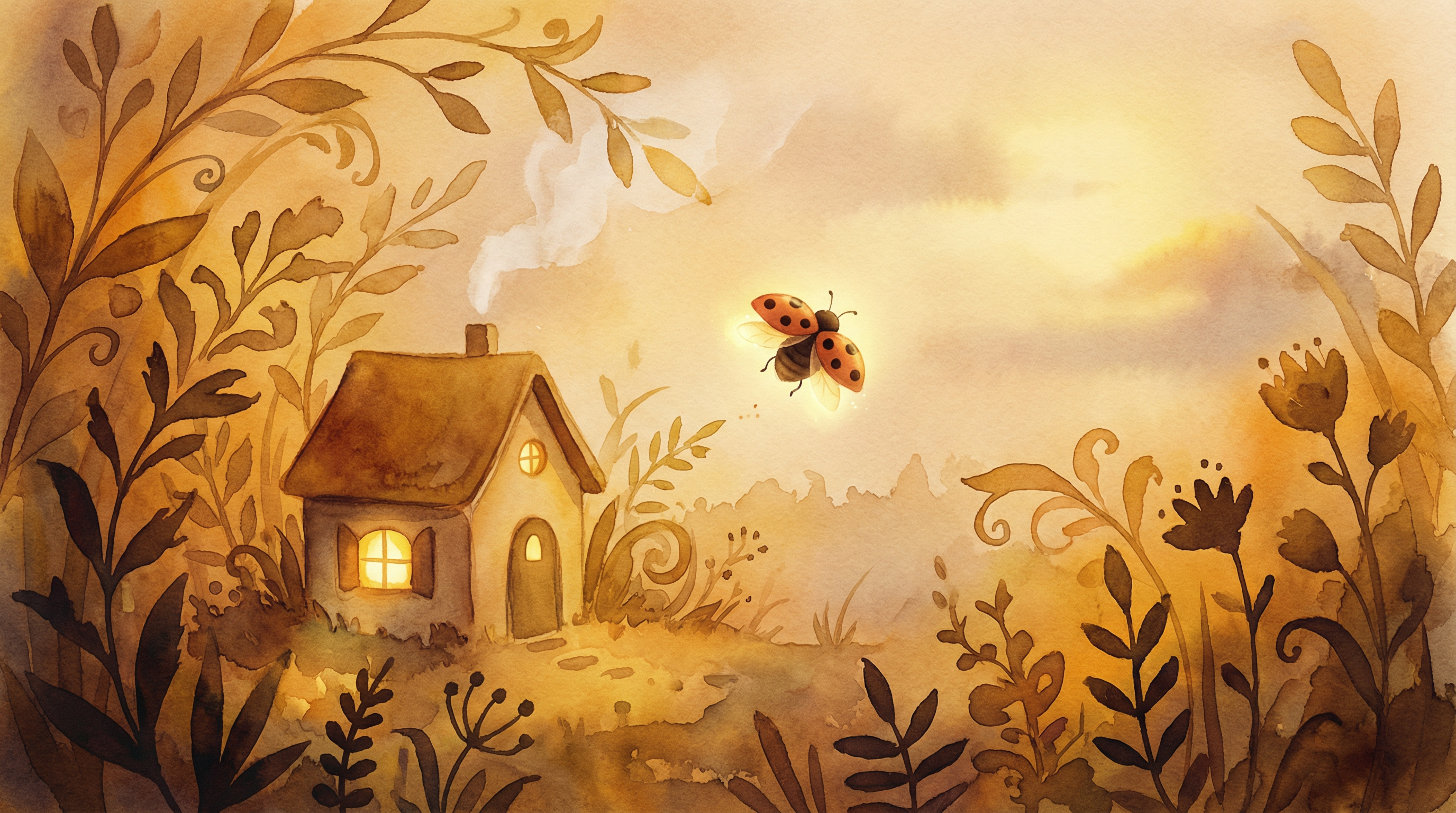
Ladybird, ladybug, fly away home,
Your house is on fire and your children are gone,
All except one and that's little Ann,
For she crept under the frying pan.
You left for a moment, a moment too long,
Your kids don't like it when their mother has gone,
They get up to mischief and all kinds of fun,
And that is why we sing you our song!
Ladybird, ladybug, fly away home,
Your house is on fire and your children are gone,
All except one and that's little Ann,
For she crept under the frying pan.
Ann is the smallest, she's so timid and shy,
She only recently learnt how to fly,
She's tiny and hides in the blink of an eye,
You may not see her as you crawl by.
Ladybird, ladybug, fly away home,
Your house is on fire and your children are gone,
All except one and that's little Ann,
For she crept under the frying pan.
Traditional lyrics — public domain. Arrangement © Singalongasong Band / ClassicRocks.
History & Background
History & Origin
"Ladybird, Ladybird, Fly Away Home" is one of the most unsettling nursery rhymes in the English tradition, and the darker for being addressed directly to the insect. The rhyme first appeared in print in Tommy Thumb's Pretty Song Book in 1744, though it was certainly in oral circulation long before.
The warning — your house is on fire, your children are gone — was traditionally understood as a genuine summons to the ladybird to fly away and save herself. In parts of England, it was considered bad luck to harm a ladybird, and this rhyme served as a folk ritual to send one safely on its way before it could be accidentally killed.
The agricultural connection is suggestive: the rhyme was recorded particularly around harvest time, when hops fields were burned to clear stubble after picking. The ladybirds, which had settled on the hop plants in large numbers to feed on aphids, faced destruction in these fires. The rhyme may have originated as a genuine warning shouted by harvesters.
The survival of little Ann — hiding under the frying pan while her siblings perish — has a grim fairy-tale logic. Ann's smallness and shyness, which might seem a disadvantage, becomes the very quality that saves her.
Our arrangement adds verses by Ian Watts that expand the domestic scene and give little Ann a fuller portrait.