Lavender's Blue
A dilly dilly love song from the fields and the farmyard
Listen
Arrangement: Ian J. Watts / Mike Wilbury · Singalongasong Band / ClassicRocks
Lyrics
Lavender's blue, dilly dilly, lavender's green,
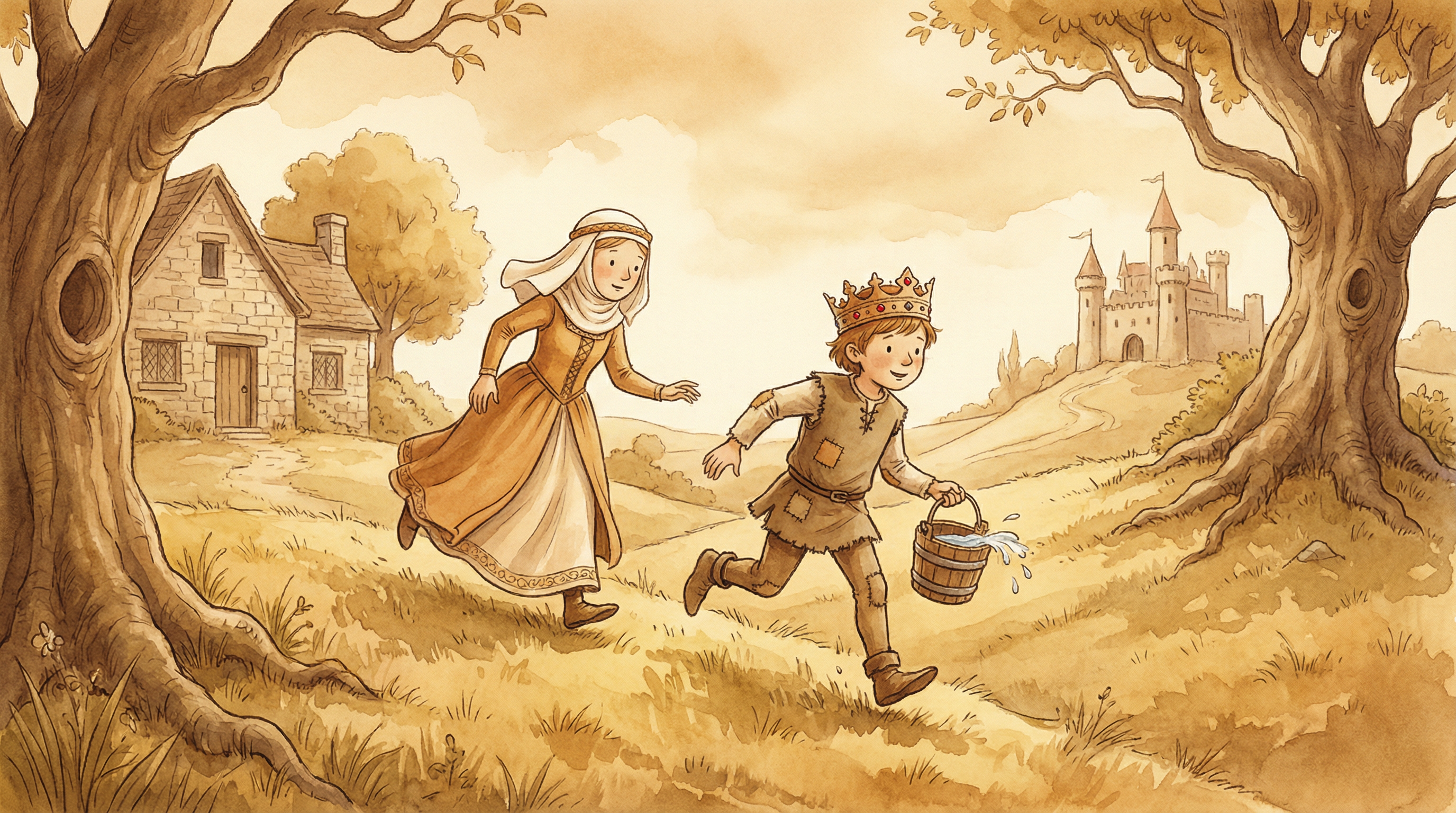
When you are King, dilly dilly, I shall be Queen.
Who told you so, dilly dilly, who told you so?
'Twas my own heart, dilly dilly, that told me so.
Call up your friends, dilly dilly, set them to work,
Some to the plough, dilly dilly, some to the fork.
Some to the hay, dilly dilly, some to thresh corn,
Whilst you and I, dilly dilly, keep ourselves warm.
Lavender's blue, dilly dilly, lavender's green,
When you are King, dilly dilly, I shall be Queen.
Who told you so, dilly dilly, who told you so?
'Twas my own heart, dilly dilly, that told me so.
Traditional lyrics — public domain. Arrangement © Singalongasong Band / ClassicRocks.
History & Background
History & Origin
"Lavender's Blue" is one of the most beautiful and ancient of all English nursery songs, with roots stretching back to the seventeenth century. A broadside version entitled "Diddle Diddle or The Kind Country Lovers" was published around 1680, making it one of the earliest printed folk songs in the English tradition.
The song is a courtship lyric in agricultural clothing: the speaker promises kingship to their beloved, asking only to be made Queen in return. It is a mutual bargain, full of warmth — "who told you so? 'Twas my own heart that told me so" — and the verses about setting friends to work at the plough, the fork, the hay, and the threshing ground all serve to create a busy pastoral world in which the two central lovers can find their time together "to keep ourselves warm".
The phrase "dilly dilly" appears to be a nonsense refrain with no literal meaning, though some have speculated it derives from a dialect word. Whatever its origin, it gives the song its distinctive, slightly hypnotic quality, the repeated syllables weaving through the verses like the scent of lavender itself.
The song gained widespread renewed popularity in 1948 when Burl Ives recorded a version that became enormously successful on both sides of the Atlantic. Our arrangement captures the timeless warmth of the original.