Little Bo Peep
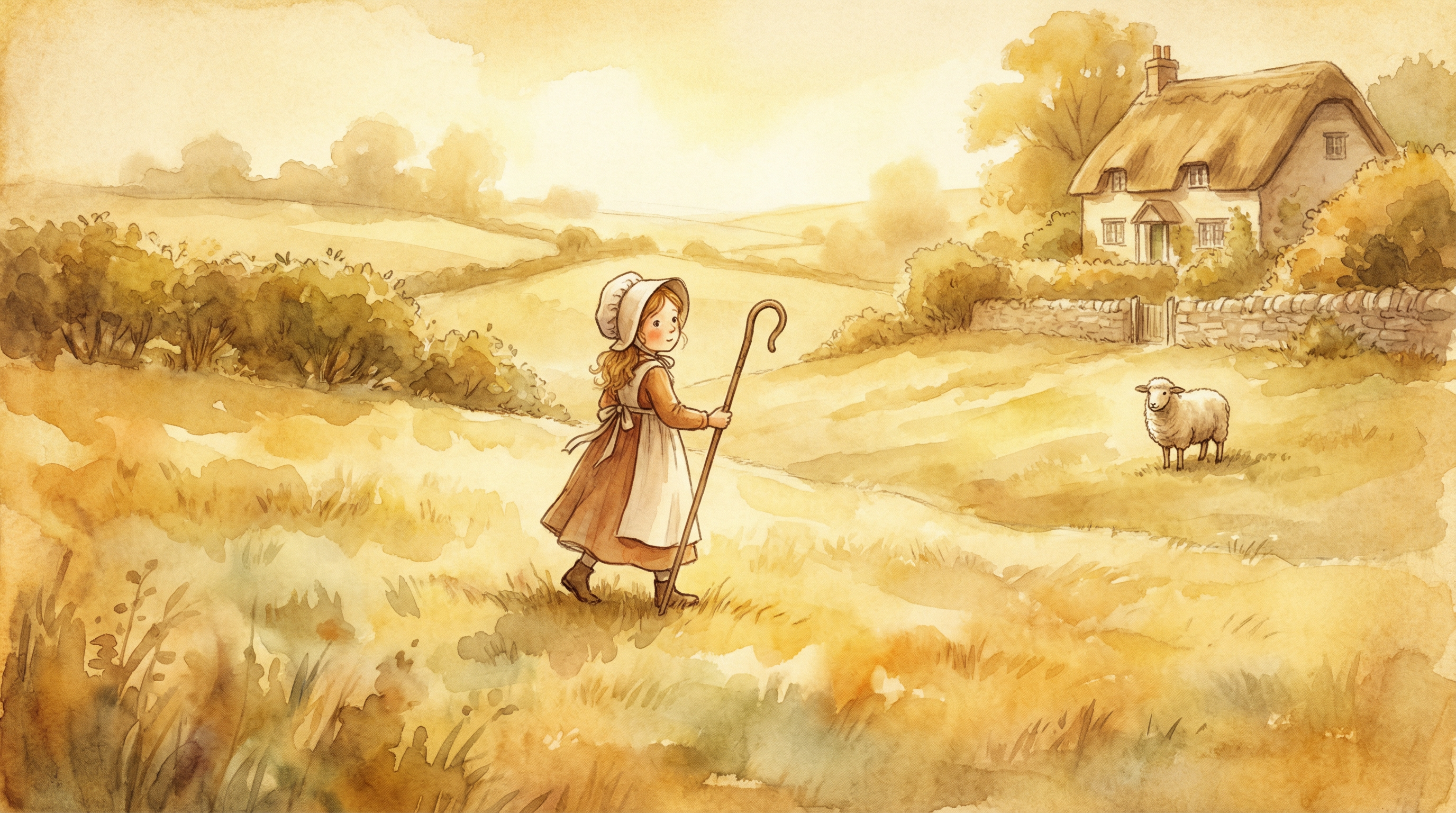
She's lost her sheep and doesn't know where to find them — leave them alone
Listen
Arrangement: Ian J. Watts / Mike Wilbury · Singalongasong Band / ClassicRocks
Lyrics
Little Bo Peep has lost her sheep
And doesn't know where to find them.
Leave them alone and they will come home,
Wagging their tails behind them.
Traditional lyrics — public domain. Arrangement © Singalongasong Band / ClassicRocks.
History & Background
History & Origin
"Little Bo Peep" first appeared in print around 1810, though earlier versions of the rhyme were likely in oral circulation before that date. The name "Bo Peep" was used in earlier centuries to refer to a children's game — similar to peekaboo — in which someone hides and then suddenly appears. The shepherdess of the rhyme seems to have taken her name from this game, perhaps suggesting she is playing at hide-and-seek with her flock.
The advice at the heart of the rhyme — "leave them alone and they will come home" — reflects genuine shepherd's wisdom. Sheep do have strong herd instincts and a sense of territory, and a lost flock will often find its way back to familiar ground if left undisturbed rather than driven. The image of them "wagging their tails behind them" as they return is one of the most cheerful in all of nursery poetry: a picture of contented animals making their way home.
There are extended versions of the rhyme in which Bo Peep goes to look for her sheep, finds them asleep, and discovers she has lost their tails as well — but these later additions are less well known than the compact, perfect original.
The rhyme's structure is elegant: problem, advice, resolution, all in four lines. It is a small masterpiece of economy that has kept its place in the nursery for over two centuries.