Little Polly Flinders
Warming her toes in the cinders — and getting in trouble for her dirty clothes
Listen
Arrangement: Ian J. Watts / Mike Wilbury · Singalongasong Band / ClassicRocks
Lyrics
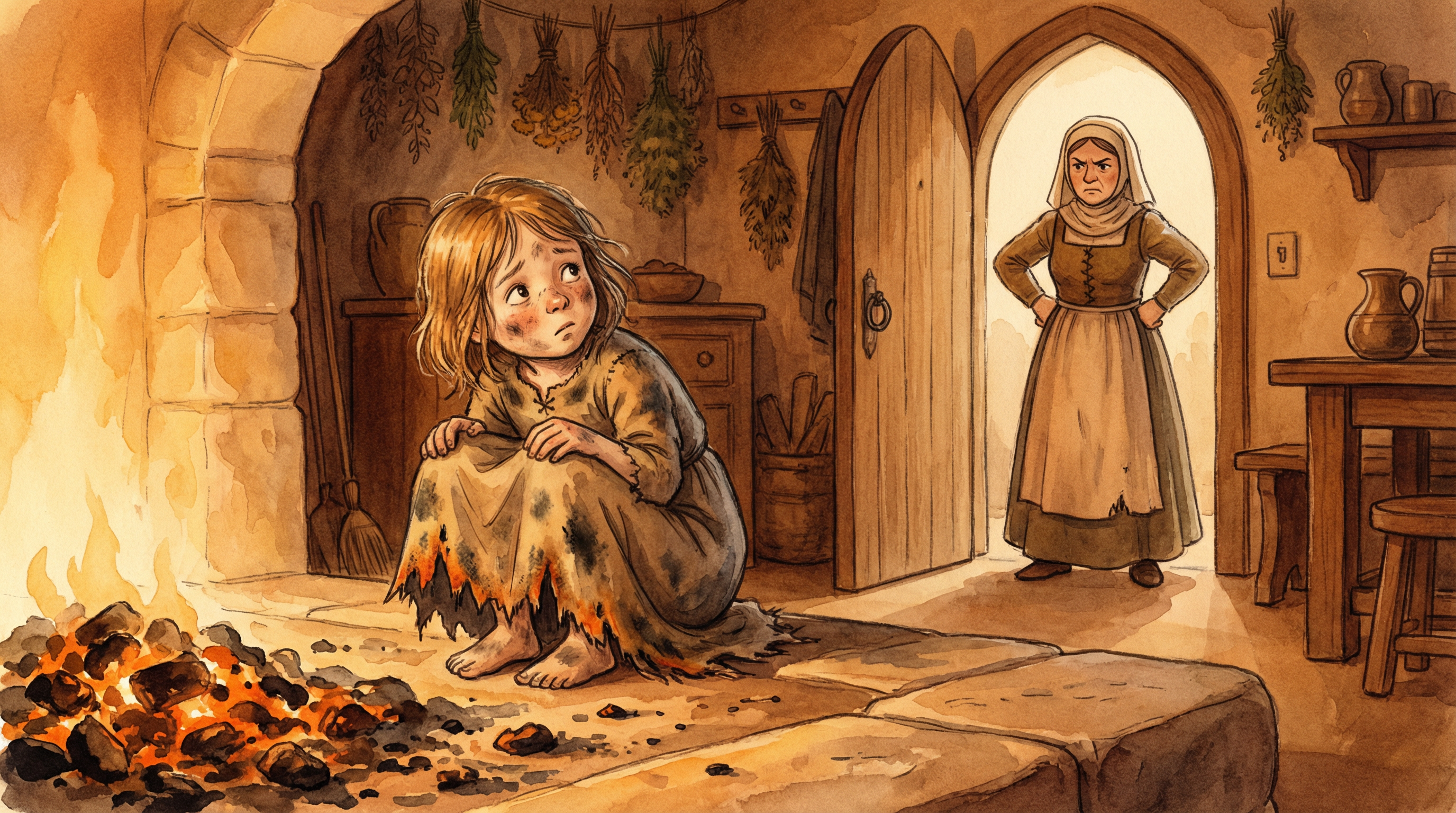
Little Polly Flinders
Sat among the cinders,
Warming her pretty little toes.
Her mother came and caught her,
And reasoned with her daughter
For spoiling her nice new clothes.
Her nice new clothes,
Her nice new clothes,
For spoiling her nice new clothes.
Traditional lyrics — public domain. Arrangement © Singalongasong Band / ClassicRocks.
History & Background
History & Origin
"Little Polly Flinders" first appeared in print around 1805 in the collection Original Ditties for the Nursery. The rhyme paints a small domestic scene with great economy: a cold child sitting as close to the fire as possible, warming her toes in the cinders, and a mother who comes to find her daughter cheerfully comfortable but with her new clothes ruined by the ash and smoke.
The word "cinders" is specific — not the fire itself, but the cooled ash and debris at its edge, which would be warm but not dangerously hot. Polly is not being reckless; she has found the most comfortable spot available to her on a cold day. The problem is entirely a matter of laundry: her new clothes are now dirty.
The mother's response is noted as "reasoning with her daughter" rather than scolding or punishing — a surprisingly modern parenting note that sets the rhyme apart from the more punitive moral tales of the period. The repeated emphasis on "nice new clothes" at the end suggests the clothes were a matter of some family pride, perhaps recently acquired at some expense.
The rhyme is a small, affectionate portrait of childhood comfort-seeking and its domestic consequences. Polly is not naughty; she is simply warm, and has been careless about what she is sitting in while she warms herself.