Mary, Mary, Quite Contrary
Silver bells and cockle shells — and pretty maids all in a row
Listen
Arrangement: Ian J. Watts / Mike Wilbury · Singalongasong Band / ClassicRocks
Lyrics
Mary, Mary, quite contrary,
How does your garden grow?
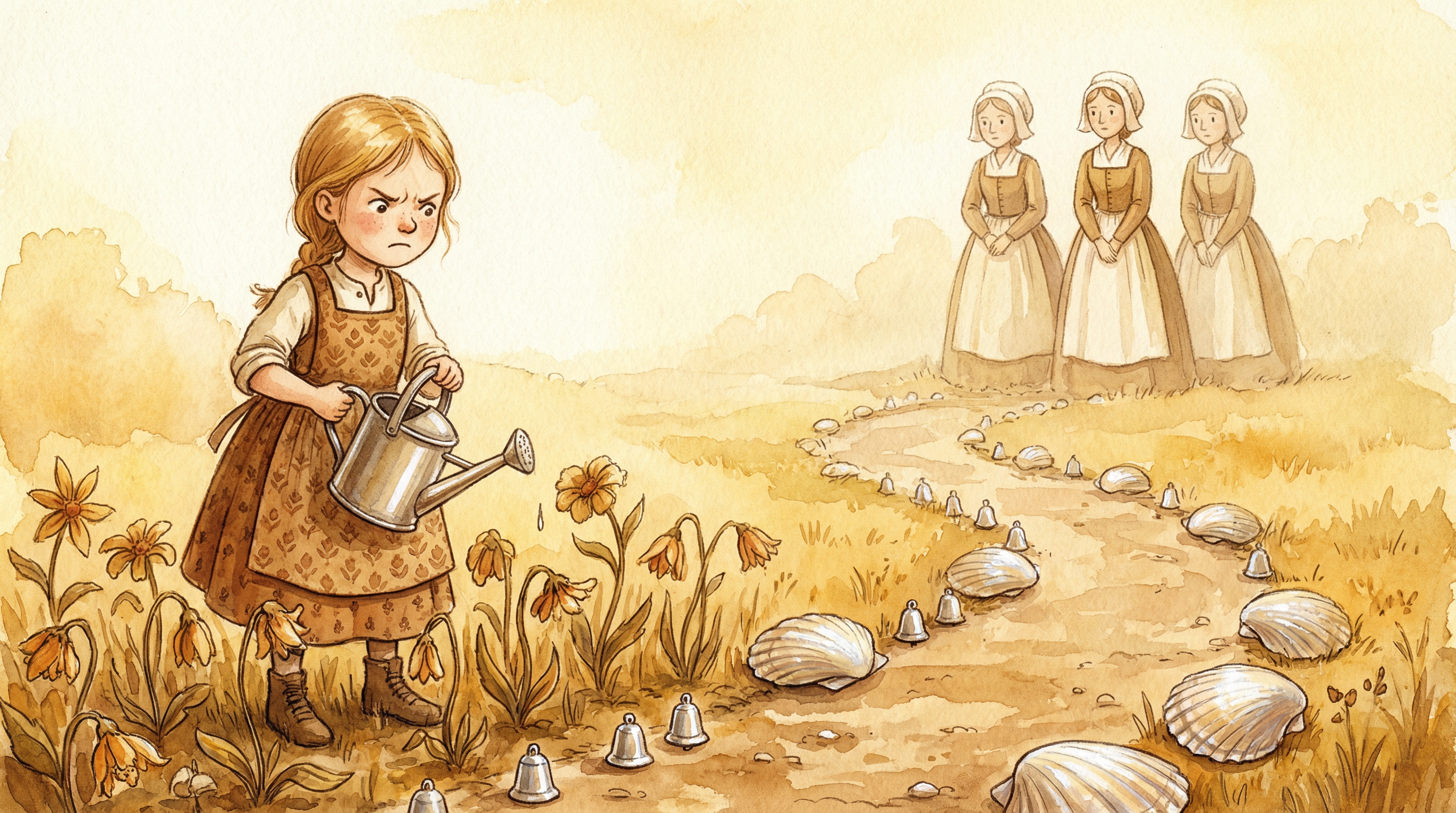
With silver bells and cockle shells
And pretty maids all in a row.
Traditional lyrics — public domain. Arrangement © Singalongasong Band / ClassicRocks.
History & Background
History & Origin
"Mary, Mary, Quite Contrary" first appeared in print in Tommy Thumb's Pretty Song Book around 1744, but its imagery has attracted more historical speculation than almost any other nursery rhyme. The most popular theory identifies Mary as Mary, Queen of Scots, with the garden as Scotland, the silver bells as the Catholic church bells she brought back from France, the cockle shells as pilgrimage badges, and the pretty maids as her famous Four Marys. Another version identifies her as the Catholic Mary Tudor, with the bells and shells as instruments of religious oppression.
Both theories are entertaining and both lack convincing contemporary evidence. The rhyme may simply be a gardening song with a mischievous female gardener at its centre — "quite contrary" meaning stubborn or perverse rather than politically seditious.
The image of the garden itself is curious: silver bells and cockle shells are not plants, and "pretty maids all in a row" is an archaic name for a flower (Saxifraga granulata, also called fair maids of France), which would make the whole rhyme an eccentric but coherent garden description after all. The silver bells may refer to Campanula (bellflowers) and the cockle shells to the scallop-shaped edges of flower beds, both common garden features.
Whatever its origin, the rhyme has retained its air of mystery and its memorable central question — how does your garden grow? — for nearly three centuries.