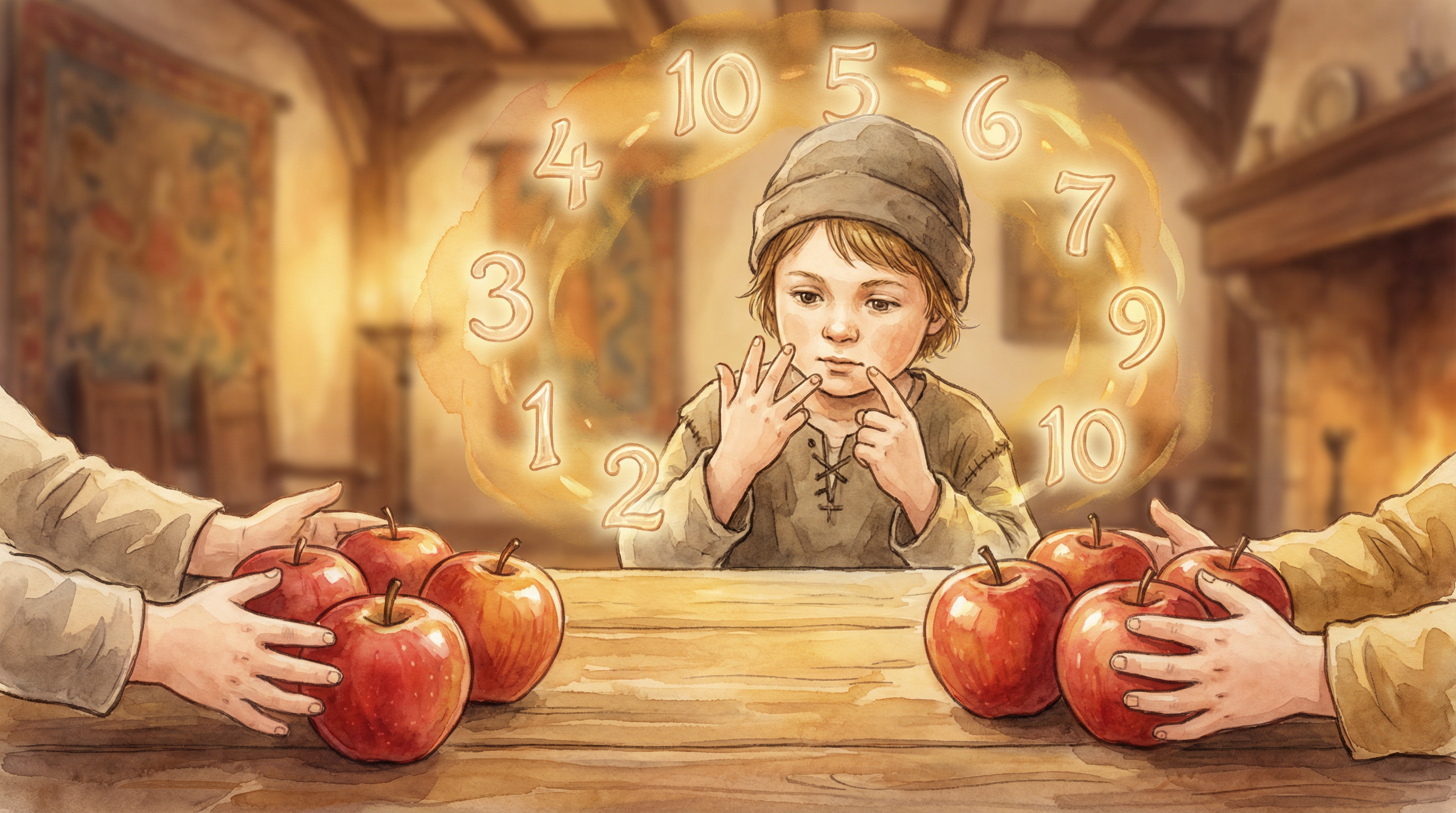
Number Bonds to Ten
Zero and ten, one and nine — learning to add up to ten through song
Listen
Arrangement: Ian J. Watts / Mike Wilbury · Singalongasong Band / ClassicRocks
Lyrics
Zero and ten, do it again,
One and nine is fine.
Two and eight is oh so great,
But three and seven is heaven.
Four and six is playing tricks,
Five and five alive.
Six and four knocking at my door,
Seven and three, dear me!
Eight and two for something new,
Nine and one have fun.
Ten and zero, what a hero,
Number bonds to ten,
Now let's count again.
Zero and ten, we're doing it again,
One and nine is fine.
Two and eight is still so great,
But three and seven is heaven.
Four and six is playing tricks,
Five and five alive.
Six and four knocking at my door,
Seven and three, dear me!
Eight and two for something new,
Nine and one have fun.
Ten and zero, what a hero,
Number bonds to ten,
You've learnt your number bonds to ten!
Traditional lyrics — public domain. Arrangement © Singalongasong Band / ClassicRocks.
History & Background
History & Origin
"Number Bonds to Ten" is an educational song written for this collection to help young children learn one of the most fundamental concepts in early mathematics: the pairs of numbers that add together to make ten. Number bonds to ten (also called complementary pairs) are the foundation of most arithmetic taught in primary school, and once children know them fluently, addition, subtraction, and mental calculation all become significantly easier.
The song covers all eleven pairs (0+10, 1+9, 2+8 and so on), presenting them in order from 0+10 to 10+0, showing children that the same relationship works symmetrically — six and four is the same bond as four and six, just seen from the other direction.
The rhyming tags for each pair — "one and nine is fine", "three and seven is heaven", "five and five alive" — make each bond individually memorable. Rather than a dry list, each pair gets its own small association, a hook that helps the number relationship stick in memory.
The repetition of the full sequence twice, with slight variation, follows the principle of spaced repetition: hearing the information again immediately after the first pass consolidates it. The final line, "You've learnt your number bonds to ten!", gives children a small moment of achievement to mark the end of the exercise.