Listen
Arrangement: Ian J. Watts / Mike Wilbury · Singalongasong Band / ClassicRocks
Lyrics
Here we go gathering nuts in May,
Nuts in May, nuts in May,
Here we go gathering nuts in May,
On a cold and frosty morning.
Who will you have for nuts in May,
Nuts in May, nuts in May,
Who will you have for nuts in May,
On a cold and frosty morning?
We'll have Jamie for nuts in May,
Nuts in May, nuts in May,
We'll have Jamie for nuts in May,
On a cold and frosty morning.
Who will you have to fetch him away,
Fetch him away, fetch him away,
Who will you have to fetch him away,
On a cold and frosty morning?
We'll have Jackie to fetch him away,
Fetch him away, fetch him away,
We'll have Jackie to fetch him away,
On a cold and frosty morning.
Traditional lyrics — public domain. Arrangement © Singalongasong Band / ClassicRocks.
History & Background
History & Origin
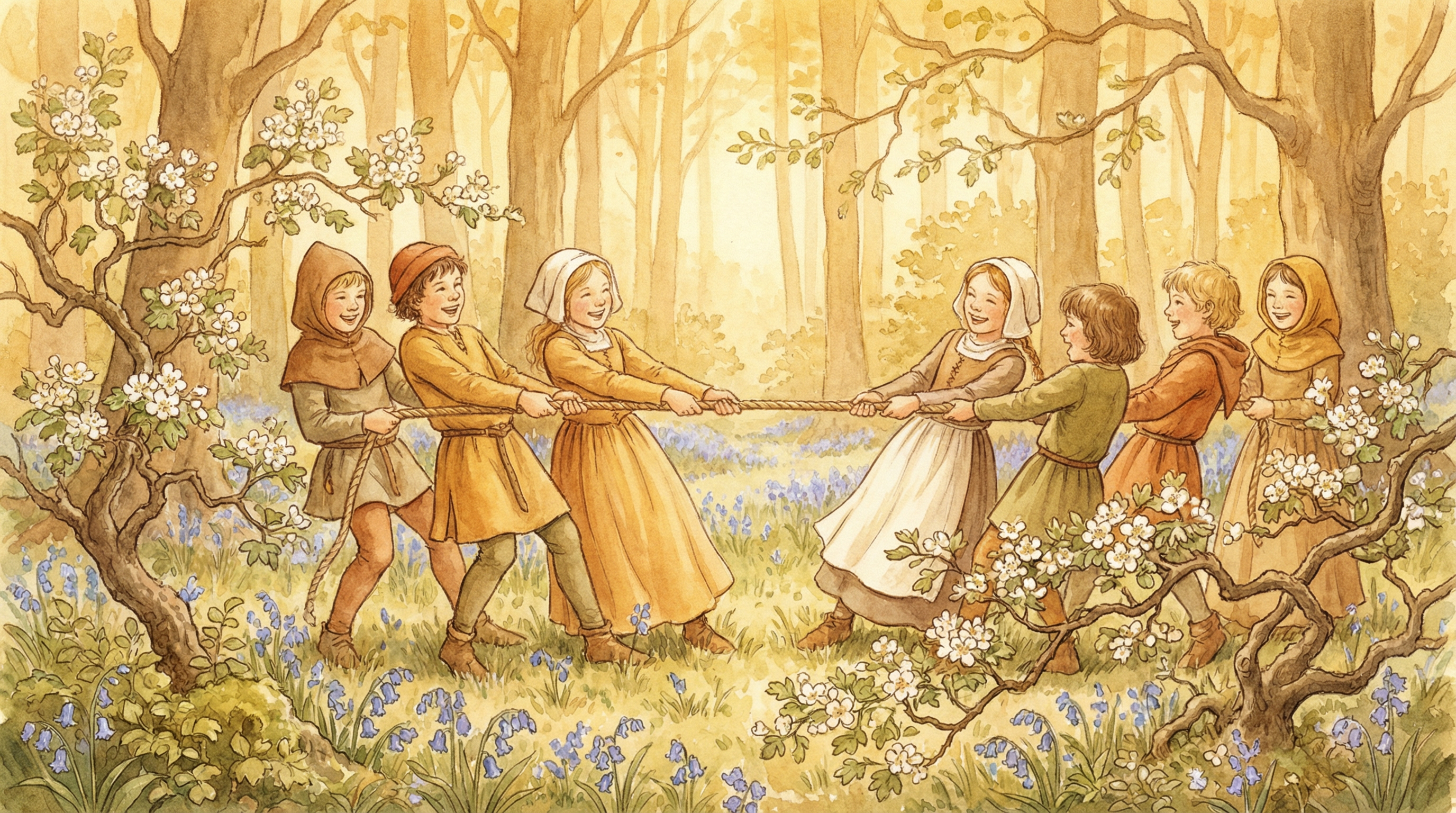
"Here We Go Gathering Nuts in May" is a traditional English singing game first recorded in the nineteenth century, though it is certainly much older. The game involves two lines of children facing each other: one line advances during the gathering verse, the other during the "who will you have" verse. A child is named and chosen, then a champion is named to "fetch them away", and a tug of war decides which side the chosen child joins. The game continues until all children are on one side.
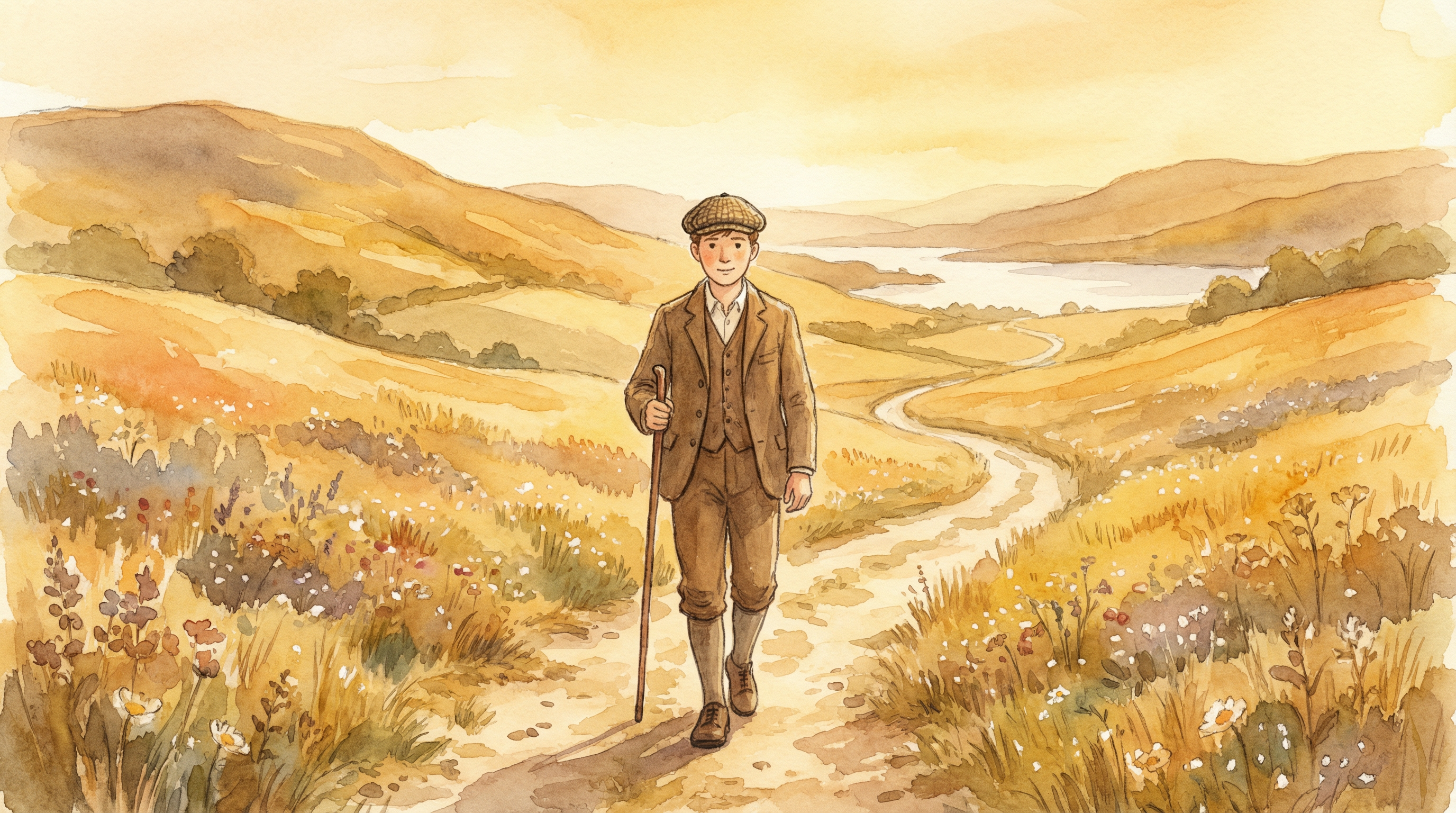
The botanical puzzle at the heart of the rhyme is well known: you cannot gather nuts in May. May is too early in the year for any nuts to be ripe or harvestable in England. The "nuts" are therefore something else — most likely "knots" of may blossom, the flowers of the hawthorn tree, which are indeed gathered in May. The song would then describe gathering bunches of may blossom, a traditional activity on May Day morning.
The "cold and frosty morning" is also puzzling given the May setting, but May mornings in England can indeed be cold, and the phrase may preserve a memory of very early morning gatherings before the warmth of the day.
The naming of specific children — Jamie, Jackie — makes the game personal and immediate. The names change with each playing, keeping the song flexible and participatory across generations.