Listen
Arrangement: Ian J. Watts / Mike Wilbury · Singalongasong Band / ClassicRocks
Lyrics
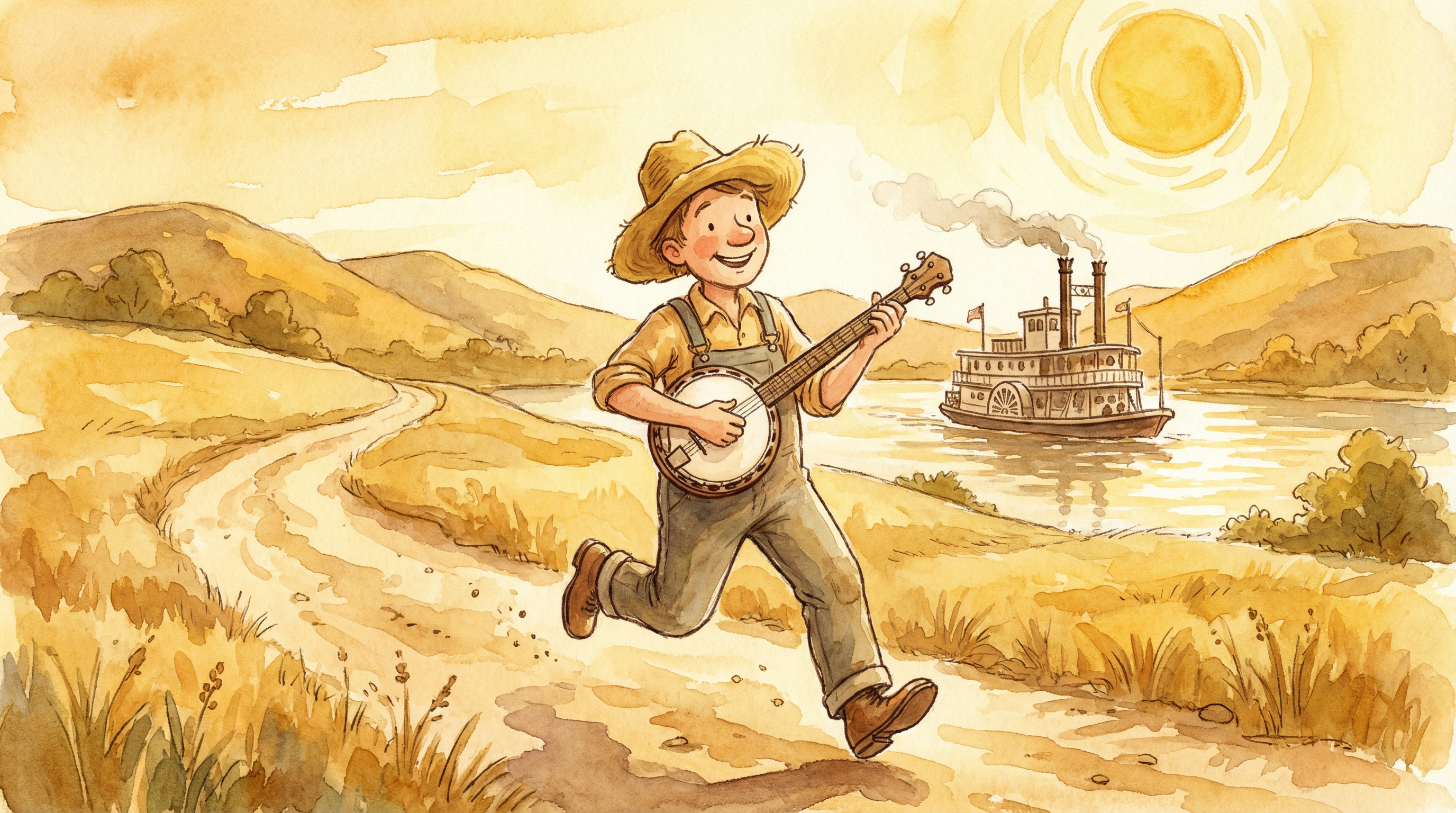
Oh, I come from Alabama
With my banjo on my knee.
I'm going to Louisiana,
My true love for to see.
It rained all night the day I left,
The weather it was dry.
The sun so hot I froze to death,
Susanna, don't you cry.
Oh! Susanna, oh don't you cry for me,
For I come from Alabama
With my banjo on my knee.
I had a dream the other night
When everything was still.
I thought I saw Susanna
A-coming down the hill.
The buckwheat cake was in her mouth,
The tear was in her eye.
Says I, "I'm coming from the south,
Susanna, don't you cry."
Oh! Susanna, oh don't you cry for me,
For I come from Alabama
With my banjo on my knee.
Traditional lyrics — public domain. Arrangement © Singalongasong Band / ClassicRocks.
History & Background
History & Origin
"Oh! Susanna" was written by Stephen Foster and published in 1848, becoming one of the most successful songs of the nineteenth century. Foster is widely regarded as the father of American popular music, and "Oh! Susanna" was his first major hit — published when he was just twenty-two and earning him very little money despite its extraordinary popularity.
The song became the unofficial anthem of the California Gold Rush of 1849, sung by thousands of "forty-niners" as they made their way west seeking fortune. The lyrics are deliberately absurdist: the narrator announces that it rained all night but the weather was dry, that the sun was so hot he froze to death. These contradictions are comic non-sequiturs rather than errors, establishing the narrator as someone telling tall tales.
Foster drew on the minstrel tradition that was dominant in American popular entertainment of the 1840s, a complex and morally troubling legacy that subsequent generations have had to grapple with. The song itself is entirely innocent in content, its imagery and narrative firmly rooted in the folk song tradition of journeys, love, and separation.
The chorus — "Oh! Susanna, oh don't you cry for me" — has one of the most immediately recognisable melodies in American music, and the song remains one of the most performed folk songs of the nineteenth century in children's music collections worldwide.