Listen
Arrangement: Ian J. Watts / Mike Wilbury · Singalongasong Band / ClassicRocks
Lyrics
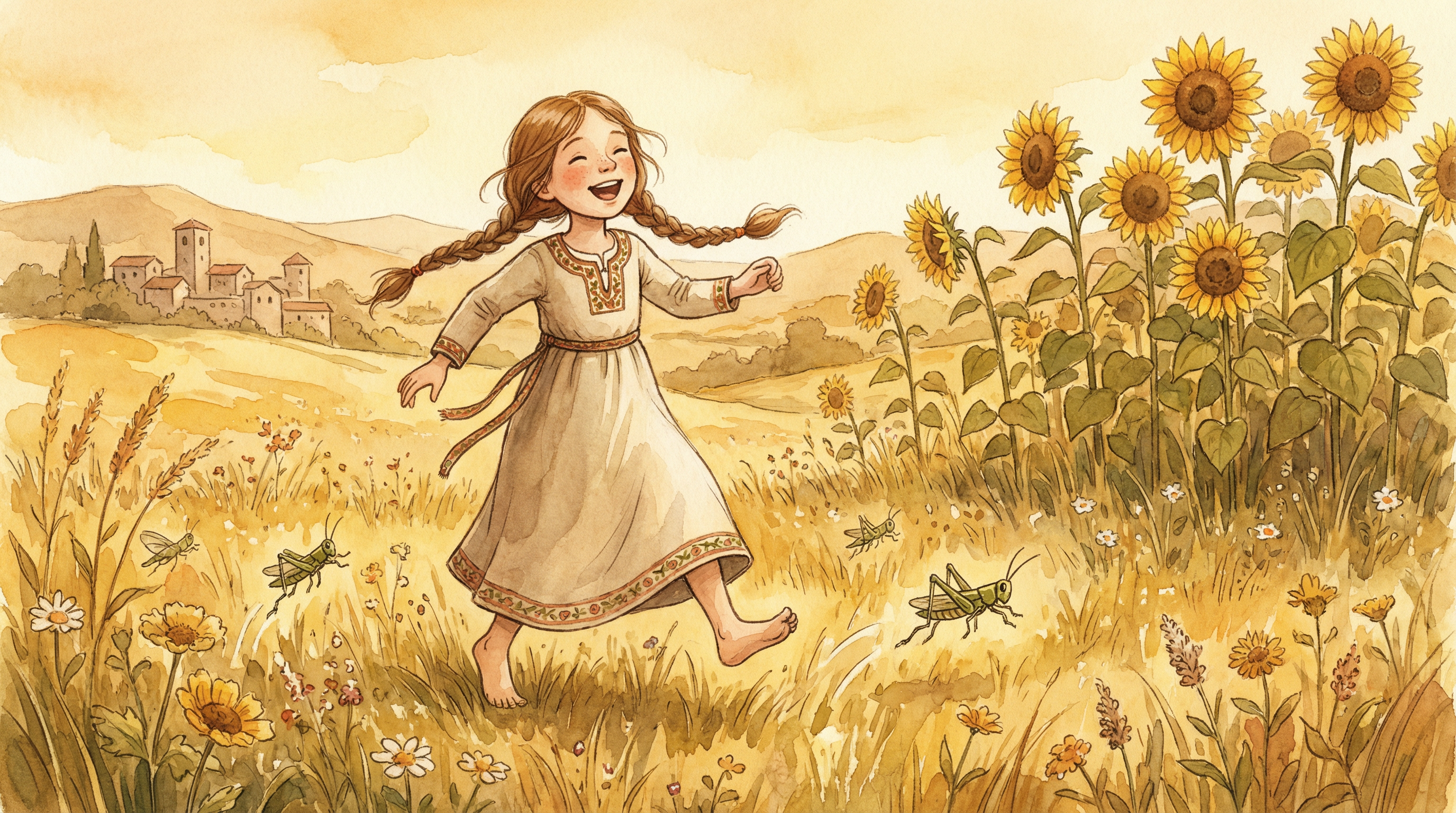
Oh, a grasshopper sittin' on a railroad track,
Sing Polly wolly doodle all the day,
A-pickin' his teeth with a carpet tack,
Sing Polly wolly doodle all the day.
Fare thee well, fare thee well,
Fare thee well my fairy fay,
For I'm going to Lou'siana for to see my Susyanna,
Sing Polly wolly doodle all the day.
Down in the hen house sittin' on my knees,
Sing Polly wolly doodle all the day,
I thought I heard a chicken sneeze,
Sing Polly wolly doodle all the day.
Fare thee well, fare thee well,
Fare thee well my fairy fay,
For I'm going to Lou'siana for to see my Susyanna,
Sing Polly wolly doodle all the day.
He sneezed so hard with the whooping cough,
Sing Polly wolly doodle all the day,
He sneezed his head and the tail right off,
Sing Polly wolly doodle all the day.
Fare thee well, fare thee well,
Fare thee well my fairy fay,
For I'm going to Lou'siana for to see my Susyanna,
Sing Polly wolly doodle all the day.
Traditional lyrics — public domain. Arrangement © Singalongasong Band / ClassicRocks.
History & Background
History & Origin
"Polly Wolly Doodle" is an American song of the minstrel tradition, with its earliest known printed text dating from around 1880. It was popular with minstrel performers and subsequently entered the children's repertoire, where its nonsense chorus — "Sing Polly wolly doodle all the day" — and its comic images made it well suited to young audiences.
The verses have the character of comic newspaper headlines: a grasshopper picking his teeth with a carpet tack, a chicken with such a severe sneeze that it loses its head and tail. The "fare thee well" chorus is the most melodically memorable part of the song, and has a genuine warmth that contrasts with the absurdist verses. "Fairy fay" is an affectionate term of address, and "Susyanna" echoes the name from "Oh! Susanna", suggesting these songs inhabited the same musical world.
The word "doodle" in the title may be related to the German word for a simple person, which passed into American English via eighteenth-century immigration. The song is best understood as cheerful, energetic nonsense, which is precisely what it has remained for nearly a hundred and fifty years.