Listen
Arrangement: Ian J. Watts / Mike Wilbury · Singalongasong Band / ClassicRocks
Lyrics
Sur le pont d'Avignon, l'on y danse, l'on y danse,
Sur le pont d'Avignon, l'on y danse tout en rond.
Les beaux messieurs font comme ça,
Et puis encore comme ça.
Sur le pont d'Avignon, l'on y danse, l'on y danse,
Sur le pont d'Avignon, l'on y danse tout en rond.
Les belles dames font comme ça,
Et puis encore comme ça.
Sur le pont d'Avignon, l'on y danse, l'on y danse,
Sur le pont d'Avignon, l'on y danse tout en rond.
Les bons amis font comme ça,
Et puis encore comme ça.
Sur le pont d'Avignon, l'on y danse, l'on y danse,
Sur le pont d'Avignon, l'on y danse tout en rond.
Les musiciens font comme ça,
Et puis encore comme ça.
Traditional lyrics — public domain. Arrangement © Singalongasong Band / ClassicRocks.
History & Background
History & Origin
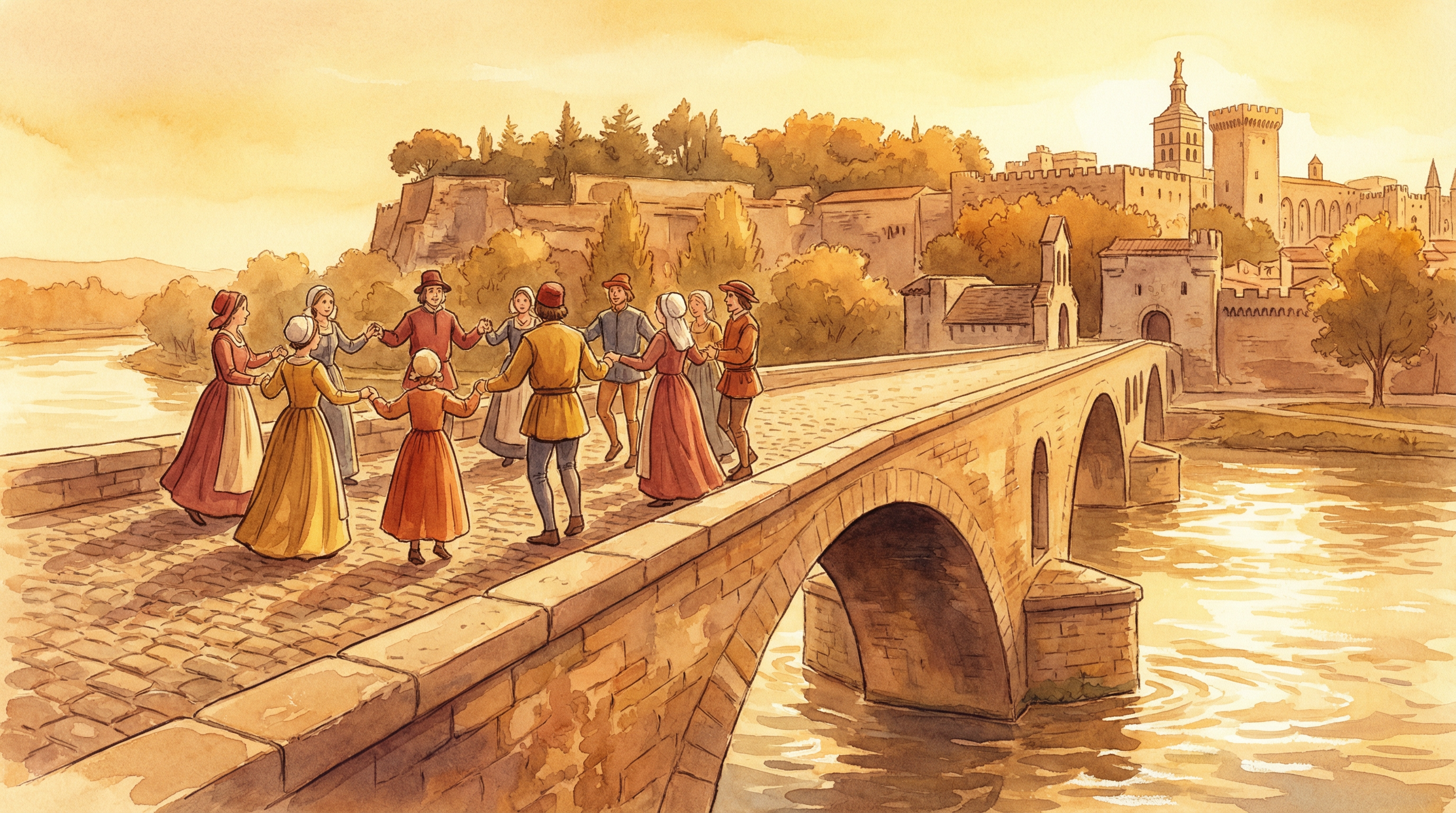
"Sur le Pont d'Avignon" is one of the most famous French folk songs, its melody instantly recognisable and its subject — dancing on the famous Avignon bridge — as charming as any nursery rhyme. The song dates from at least the fifteenth century and is associated with the Pont Saint-Bénézet, the medieval bridge across the Rhône in Avignon.
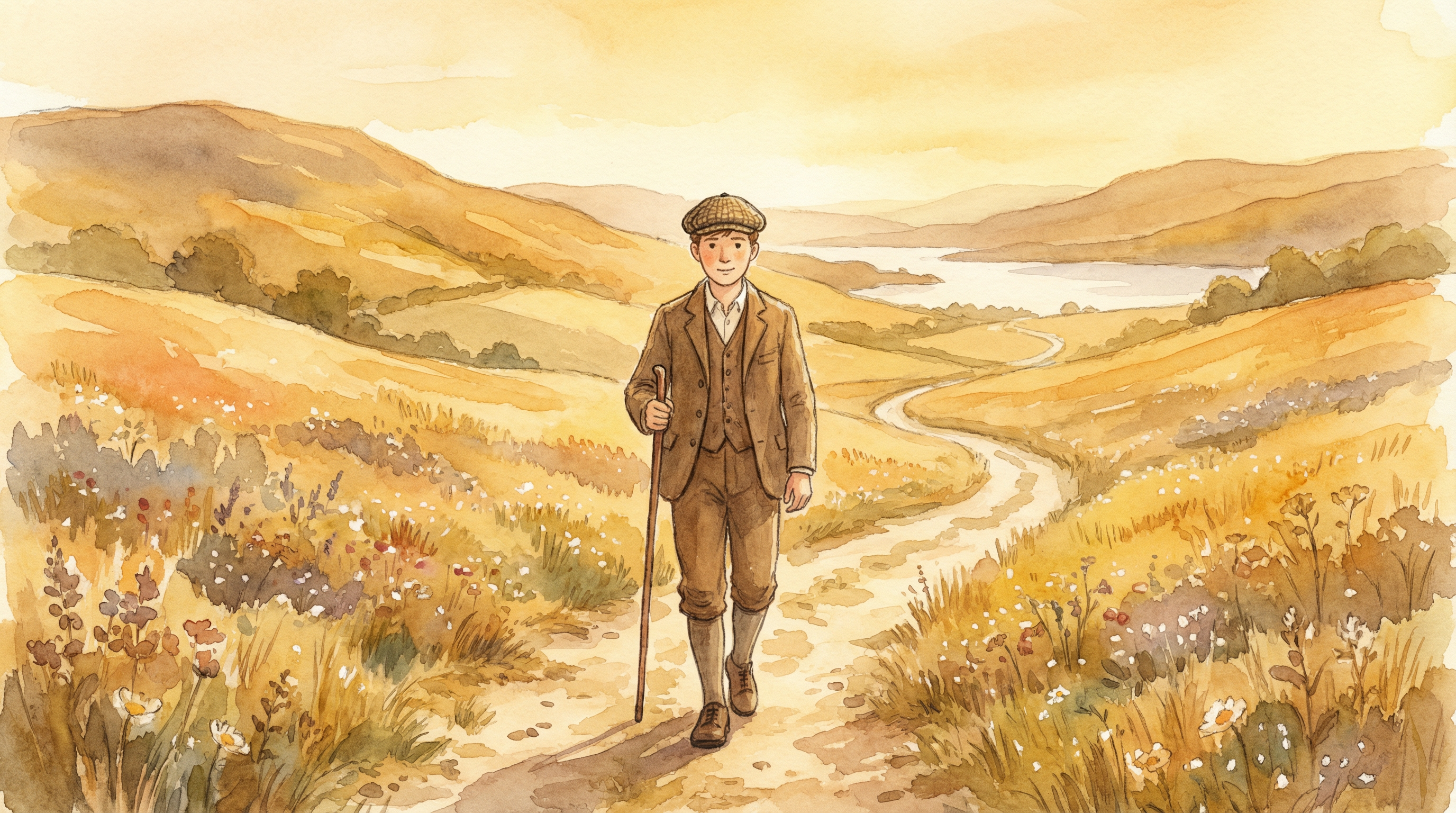
The bridge, of which only four arches now remain, was one of the great engineering achievements of medieval France, stretching nearly a kilometre across the river. According to legend, it was built by a shepherd boy named Bénézet who was instructed by angels to construct a bridge across the Rhône. Whether dancing actually took place on the bridge is historically uncertain — the bridge was quite narrow — but the image of people dancing in a circle on a famous medieval bridge has proved irresistible for centuries.
The song's structure is simple and repetitive, with each verse introducing a new group of dancers — fine gentlemen, beautiful ladies, good friends, musicians — each performing their characteristic gesture. "Tout en rond" (all in a circle) describes the classic ring dance that children still perform to this day. The phrase "font comme ça / et puis encore comme ça" (they do like this, and then again like this) invites the matching action, making the song a natural candidate for use with young children.