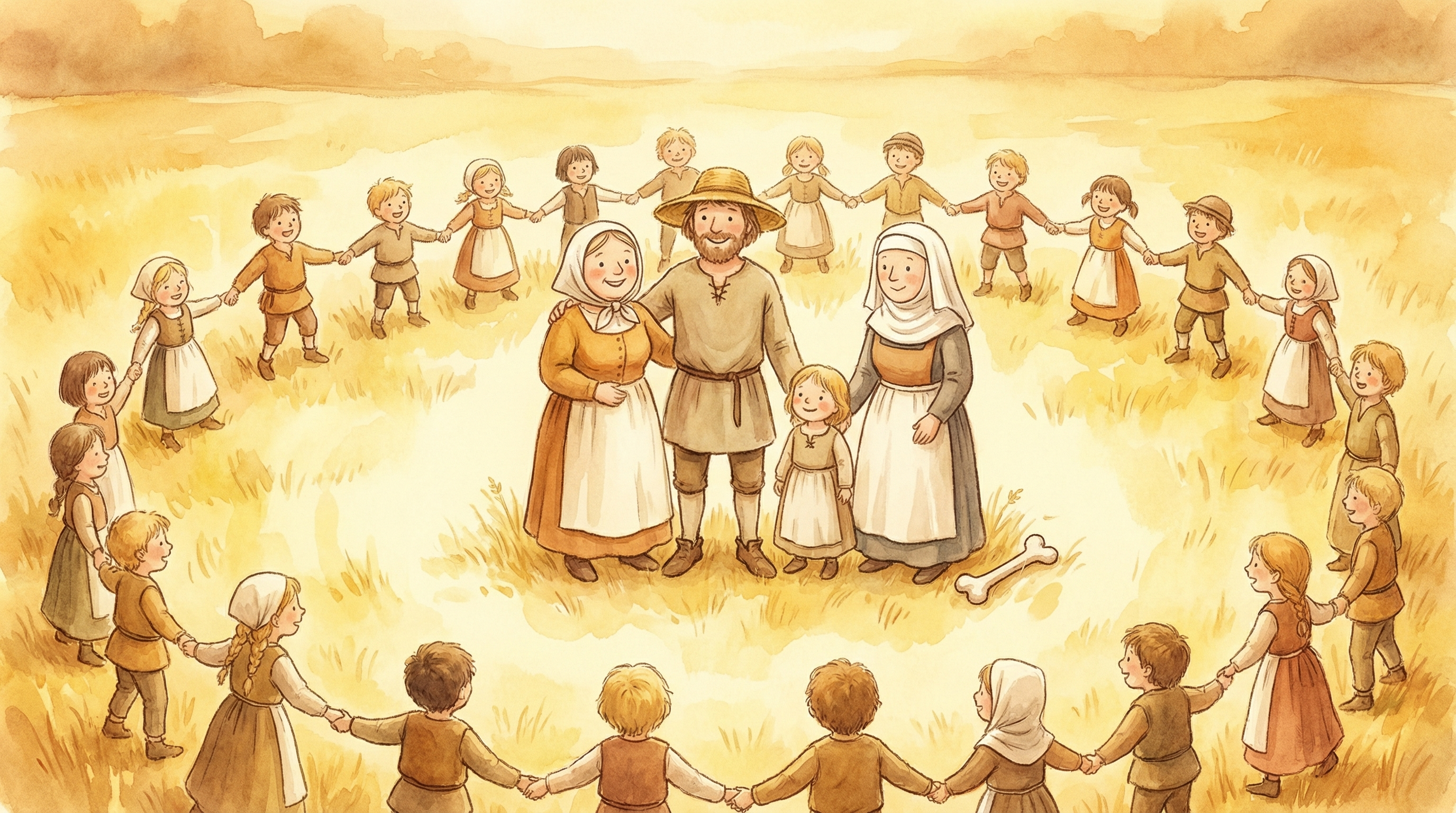
The Farmer's in His Den
The farmer wants a wife, the wife wants a child — and the dog wants a bone
Listen
Arrangement: Ian J. Watts / Mike Wilbury · Singalongasong Band / ClassicRocks
Lyrics
The farmer's in his den,
The farmer's in his den,
E-aye, e-aye, the farmer's in his den.
The farmer wants a wife,
The farmer wants a wife,
E-aye, e-aye, the farmer wants a wife.
The wife wants a child,
The wife wants a child,
E-aye, e-aye, the wife wants a child.
The child wants a nurse,
The child wants a nurse,
E-aye, e-aye, the child wants a nurse.
The nurse wants a dog,
The nurse wants a dog,
E-aye, e-aye, the nurse wants a dog.
The dog wants a bone,
The dog wants a bone,
E-aye, e-aye, the dog wants a bone.
We all pat the bone,
We all pat the bone,
E-aye, e-aye, we all pat the bone.
Traditional lyrics — public domain. Arrangement © Singalongasong Band / ClassicRocks.
History & Background
History & Origin
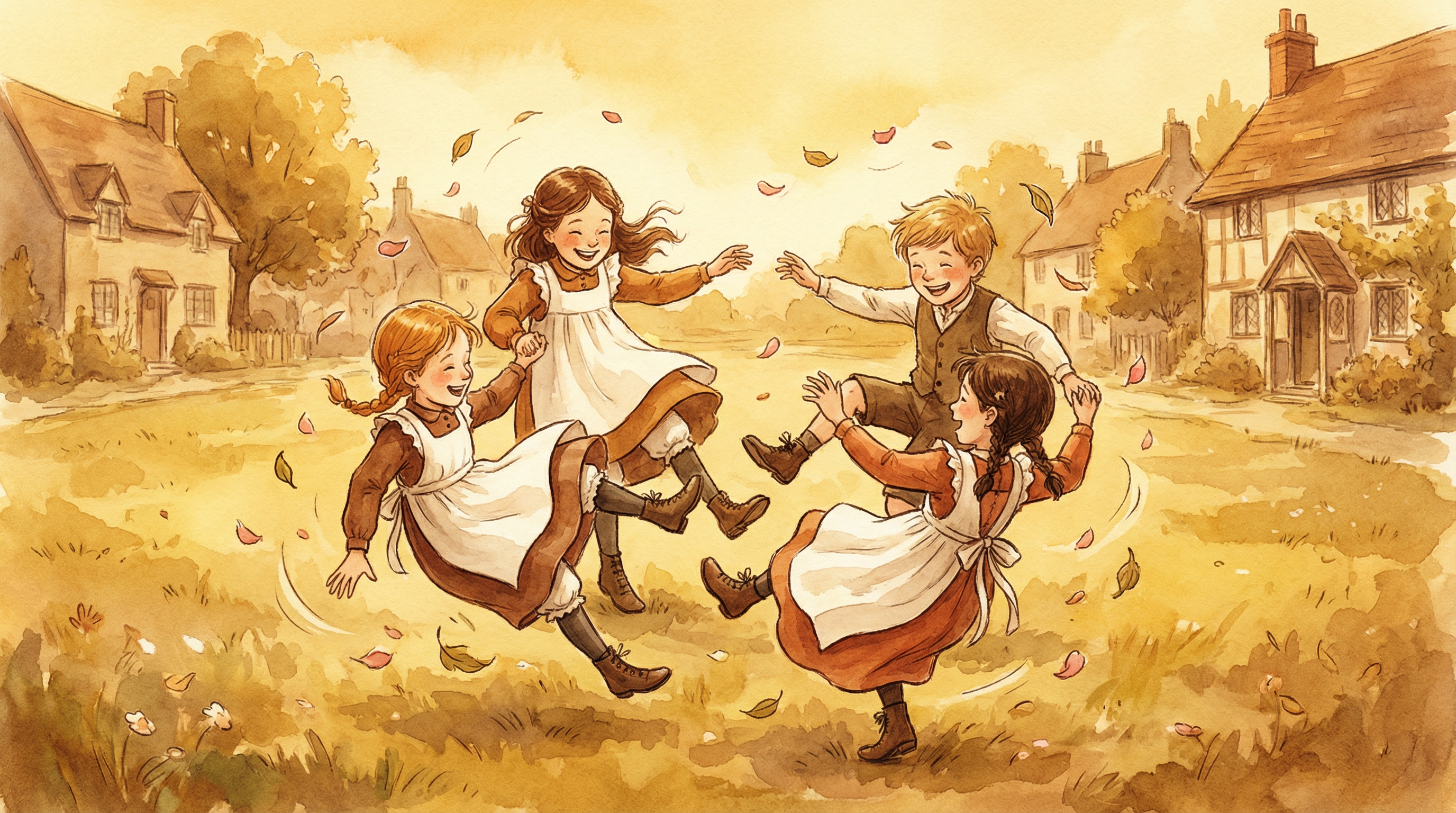
"The Farmer's in His Den" is a traditional circle singing game, recorded in England since the nineteenth century and popular in nurseries and primary schools throughout the English-speaking world. In the game, one child stands in the centre as the farmer, then picks others to join them as wife, child, nurse, dog, and bone, until the circle is full and everyone pats the bone together.
The game teaches children about social relationships — the household that grows outward from a single person, each new arrival requiring something from the next. There is a logic to the chain: the farmer needs a wife, the wife needs a child, the child needs a nurse, the nurse needs a dog, the dog needs a bone. Each need is met, and the result is a complete household, including a bone.
The "den" of the farmer is not a lair but a field enclosure — a pen or fold where animals might be kept. The refrain "e-aye, e-aye" (sometimes written as "ee-eye-ee-eye-oh" in connection with "Old MacDonald") suggests the two songs share a musical ancestry, both rooted in the sounds of the agricultural landscape.
The game ends with everyone patting the bone, which is either the child's toy or the dog's bone — the songs does not specify — and the inclusive final action brings the whole circle together.