There Was an Old Woman Who Lived in a Shoe
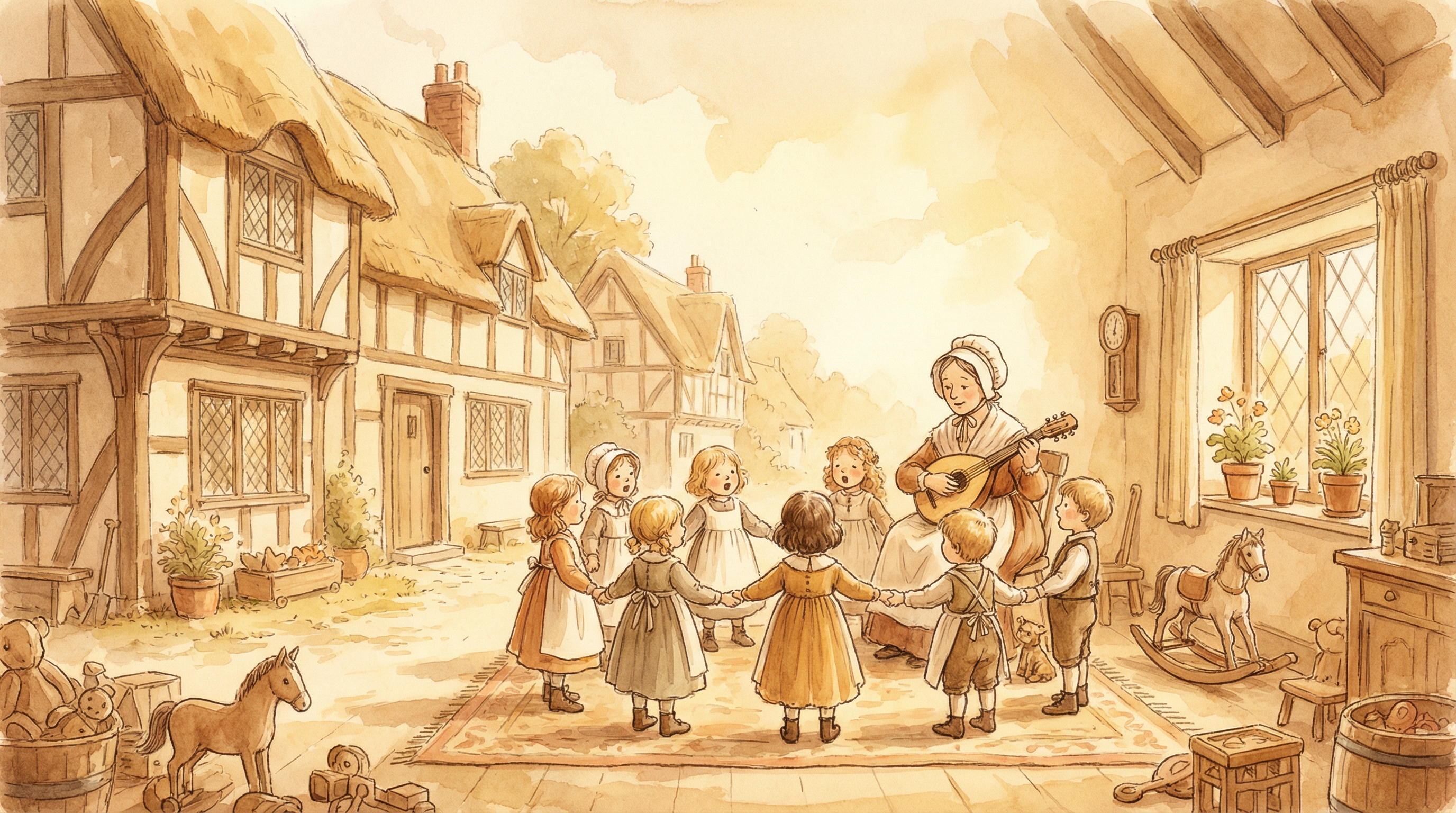
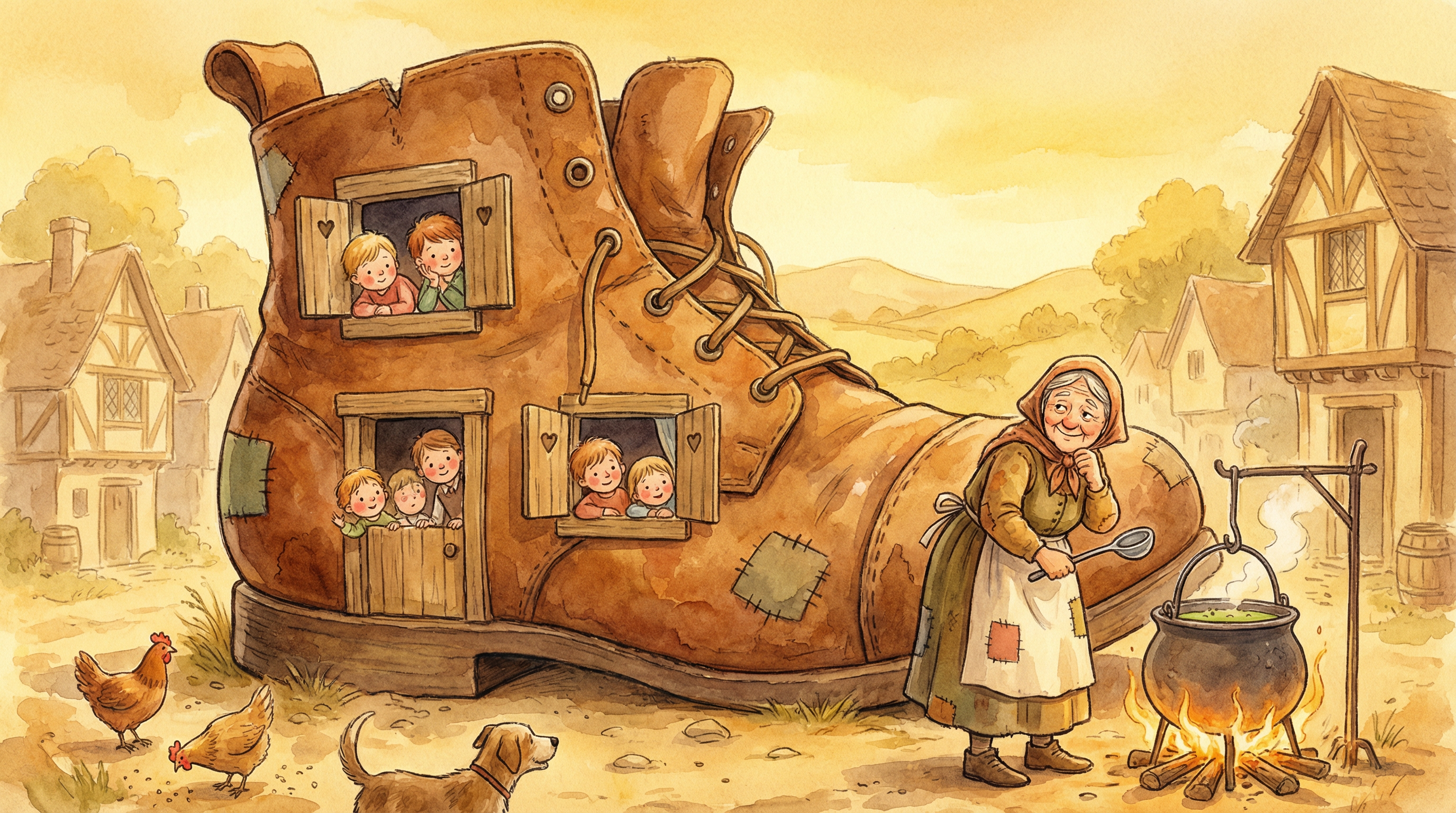
The old woman with so many children she didn't know what to do
Listen
Arrangement: Ian J. Watts / Mike Wilbury · Singalongasong Band / ClassicRocks
Lyrics
There was an old woman
Who lived in a shoe,
She had so many children
She didn't know what to do!
So she gave them some broth
Without any bread,
And she whipped them all soundly
And sent them to bed!
There was an old woman
Who lived in a shoe,
She had so many children
She didn't know what to do!
Then out went th' old woman
To bespeak 'em a coffin,
And when she came back,
She found 'em all a-loffeing.
Traditional lyrics — public domain. Arrangement © Singalongasong Band / ClassicRocks.
History & Background
History & Origin
"There Was an Old Woman Who Lived in a Shoe" is one of the most recognisable nursery rhymes in the English language, with a history extending back at least to the eighteenth century. The earliest known printed version appears in Joseph Ritson's Gammer Gurton's Garland in 1794, though the rhyme was almost certainly in oral circulation well before that.
The image of a woman so beset by children that she resorts to broth without bread and a firm bedtime has prompted much speculation over the years. Peter Opie, in his Oxford Dictionary of Nursery Rhymes, surveys various theories about the rhyme's origin — including political interpretations connecting the old woman to a historical figure — though none has been conclusively established. What seems likely, as with many such rhymes, is that it reflects the real anxieties of poverty and large families in pre-industrial Britain.
The second verse here, less often printed, shows the children's resilience: while the old woman goes out to order a coffin, they find something to laugh about. It is a darker image than the first verse, but somehow heartening.