Three Blind Mice
The three blind mice who ran after the farmer's wife — two versions in one
Listen
Arrangement: Ian J. Watts / Mike Wilbury · Singalongasong Band / ClassicRocks
Lyrics
Three blind mice, three blind mice,
See how they run, see how they run!
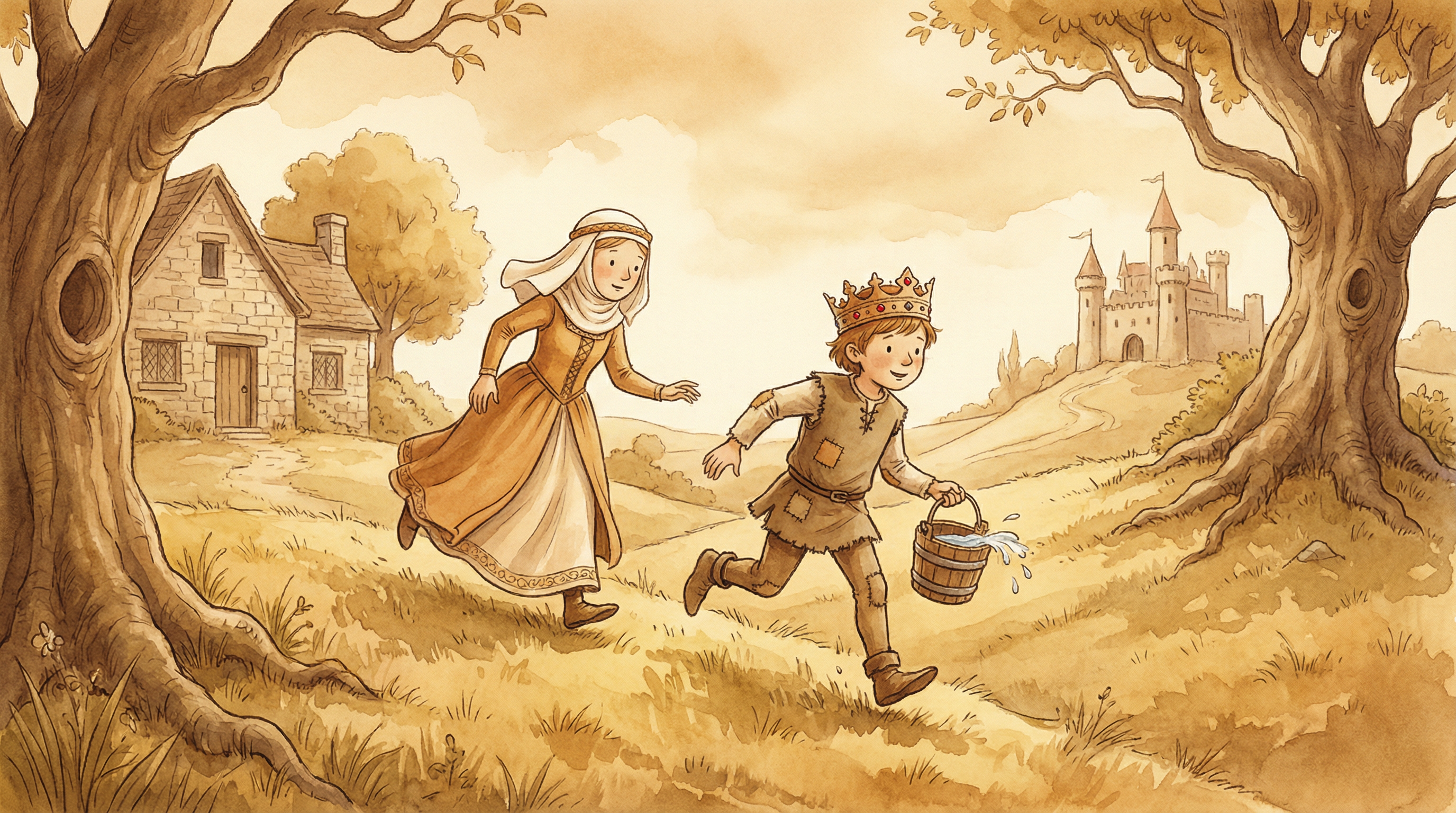
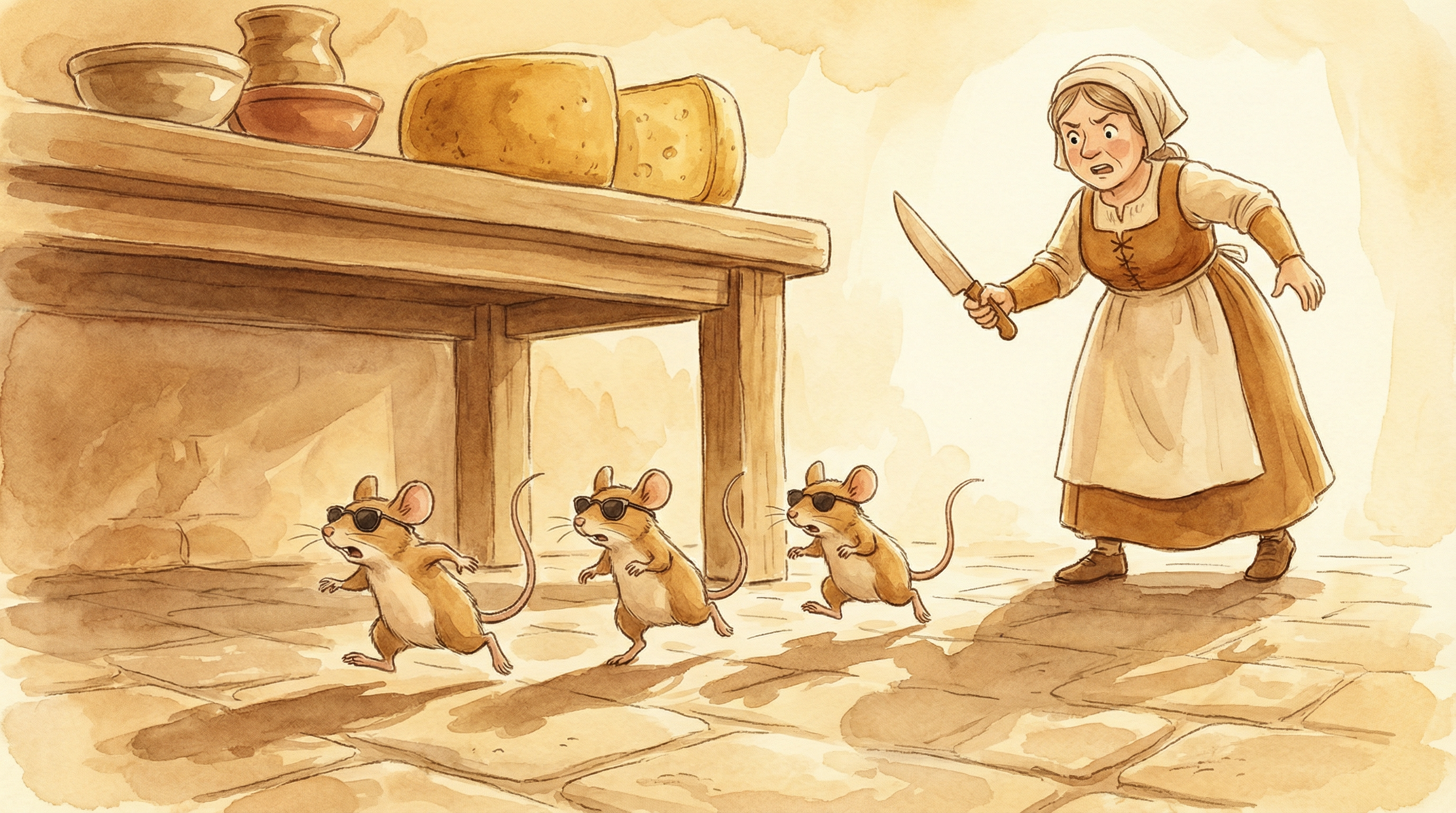
They all ran after the farmer's wife,
She cut a cheese with a carving knife,
Have you ever seen such a thing in your life
As three blind mice?
Three blind mice, three blind mice,
See how they run, see how they run!
They all ran after the farmer's wife,
Who cut off their tails with a carving knife,
Did you ever see such a thing in your life
As three blind mice?
Traditional lyrics — public domain. Arrangement © Singalongasong Band / ClassicRocks.
History & Background
History & Origin
"Three Blind Mice" is one of the oldest surviving English nursery rhymes, with a version appearing in a manuscript collection as far back as 1609. The melody to which it is most commonly sung today was published in a slightly different form in Thomas Ravenscroft's Deuteromelia in 1609, making it one of the earliest nursery rhymes with a recorded musical setting.
The rhyme is notable for having two distinct versions of the critical line: in one, the farmer's wife cuts a cheese with her carving knife; in the other, she cuts off the mice's tails. This recording includes both, giving listeners the gentle cheese version followed by the more famous and dramatic tail-cutting verse.
Attempts to read political allegory into the rhyme — connecting the farmer's wife to Queen Mary I and the blind mice to Protestant bishops — are popular but unproven. More likely, the rhyme is a piece of comic nonsense that has survived for centuries because it is memorable, rhythmically satisfying, and just slightly alarming. The round form in which it is traditionally sung makes it a standard in children's singing groups.